






Choosing the right woofer Speaker driver is an important step when building a DIY Hi-Fi speaker system. The woofer is responsible for reproducing low and mid-low frequencies, so its size, frequency response, impedance, sensitivity, and power handling can directly affect the overall sound performance.
For DIY audio enthusiasts, the right woofer driver should not only match the desired sound characteristics but also work properly with the speaker enclosure, amplifier, and crossover network.
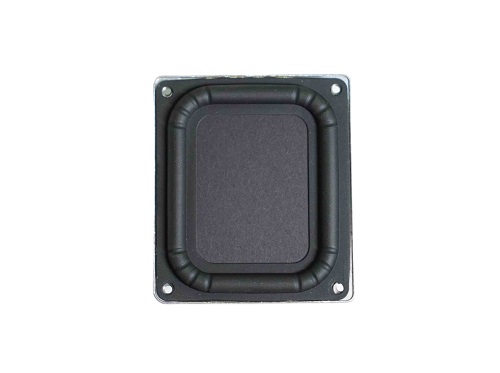
What Is a Woofer Speaker Driver?
A woofer speaker driver is a loudspeaker component designed to reproduce low-frequency sound. It is commonly used in two-way and three-way speaker systems, where different drivers are responsible for different frequency ranges.
Compared with a dedicated subwoofer, a woofer generally covers a wider frequency range. This makes it suitable for bookshelf speakers, floor-standing speakers, studio monitors, and various custom Hi-Fi speaker projects.
Why Choose a Woofer for a DIY Hi-Fi Project?
DIY speaker design allows builders to select individual components according to their acoustic and mechanical requirements. A suitable woofer can provide the desired low-frequency response while giving greater flexibility in cabinet and crossover design.
Flexible speaker design: Choose the driver according to cabinet size and system configuration.
Custom sound performance: Different woofer designs can produce different Bass characteristics.
Easy system integration: Woofers can be combined with Tweeters or midrange drivers.
Multiple application options: Suitable for bookshelf, floor-standing, studio, and custom Hi-Fi Speakers.
DIY customization: Driver specifications can be matched to specific amplifier and enclosure requirements.
Key Specifications to Consider
When selecting woofer speaker drivers for DIY Hi-Fi projects, several specifications should be evaluated together rather than focusing on a single parameter.
1. Woofer Size
Woofer diameter is one of the first specifications to consider. Common sizes can be selected according to the available cabinet space and required low-frequency performance. A larger driver is not automatically better, as the driver must be matched with the enclosure and overall system design.
2. Frequency Response
Frequency response indicates the range of frequencies that the woofer can reproduce effectively. A suitable frequency range helps determine how the woofer will work with the tweeter, midrange driver, and crossover network.
3. Impedance
Nominal impedance should be compatible with the amplifier and crossover design. Common speaker impedance options include 4 ohms and 8 ohms, although other configurations may also be available for specific applications.
4. Sensitivity
Sensitivity indicates how efficiently a speaker driver converts amplifier power into acoustic output. When designing a multi-driver speaker, the sensitivity of the woofer should be considered together with the other drivers.
5. Power Handling
Power handling is another important factor for DIY speaker projects. The woofer should be selected according to the amplifier output and intended listening level to achieve reliable operation.
6. Mounting Dimensions
The woofer must physically fit the speaker cabinet. Before purchasing a driver, check the overall diameter, cutout diameter, mounting depth, and mounting hole configuration.
How to Match a Woofer with a Speaker Enclosure?
The woofer and enclosure should be considered as a complete acoustic system. Cabinet volume, internal structure, port design, and enclosure type can all influence the final low-frequency response.
For a DIY Hi-Fi project, it is therefore important to check the woofer's technical parameters before designing or modifying the cabinet. A driver that performs well in one enclosure may produce different results in another enclosure.
Woofer and Crossover Design
In a two-way speaker system, the woofer normally handles the lower frequencies while the tweeter handles high frequencies. A crossover network separates the frequency ranges and directs the appropriate signals to each driver.
The woofer's frequency response, sensitivity, and impedance should therefore be considered when determining the crossover point. Proper matching between the woofer and tweeter helps create a more balanced overall response.
Applications of DIY Woofer Speaker Drivers
Woofer speaker drivers can be used for a wide range of custom audio projects, including:
DIY Hi-Fi bookshelf speakers
Floor-standing Hi-Fi speakers
Studio monitor projects
Custom two-way speaker systems
Three-way speaker systems
Home audio equipment
Professional audio speaker development
Conclusion
Selecting the right woofer speaker driver is an important part of building a successful DIY Hi-Fi speaker. Driver size, frequency response, impedance, sensitivity, power handling, and mounting dimensions should all be considered together with the amplifier, enclosure, and crossover design.
For DIY Hi-Fi builders and speaker manufacturers, choosing a woofer based on the complete system requirements can provide greater flexibility when developing a custom speaker solution.
Looking for Woofer Speaker Drivers?
If you are developing DIY Hi-Fi speakers or custom audio equipment, contact us to discuss woofer speaker drivers and customized requirements for your project.