






Ribbon Tweeters are known for their fast response, detailed high frequencies, and wide sound dispersion. But does a ribbon Tweeter actually sound better than other tweeter types? The answer depends on the Speaker system, application, and performance requirements.
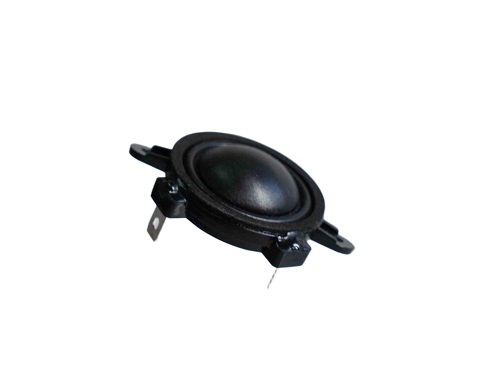
What Is a Ribbon Tweeter?
A ribbon tweeter uses a very thin conductive diaphragm suspended in a magnetic field. Instead of driving a conventional voice coil and dome, the ribbon itself responds to the audio signal.
Because of its lightweight diaphragm, a ribbon tweeter can respond quickly to changes in high-frequency signals. This makes it suitable for audio systems where high-frequency detail and transient response are important.
Why Do Ribbon Tweeters Sound Different?
One of the main characteristics of a ribbon tweeter is its low moving mass. A lighter diaphragm can respond rapidly to high-frequency signals, helping reproduce subtle details in music and other audio content.
Ribbon tweeters can also provide a different dispersion pattern compared with conventional dome tweeters. Depending on the design, this can contribute to a spacious and detailed listening experience.
Are Ribbon Tweeters Better Than Dome Tweeters?
There is no universal answer. Dome tweeters, ribbon tweeters, horn tweeters, and other designs each have different acoustic characteristics.
| Tweeter Type | Typical Characteristics | Common Applications |
|---|---|---|
| Ribbon Tweeter | Fast response, detailed high frequencies | Hi-Fi and professional audio |
| Dome Tweeter | Balanced response and versatile performance | Home and professional speakers |
| Horn Tweeter | High efficiency and strong output | PA and professional audio systems |
| AMT Tweeter | Fast transient response and controlled dispersion | High-end and professional audio |
What Are the Advantages of Ribbon Tweeters?
Fast transient response: The lightweight diaphragm can react quickly to high-frequency signals.
High-frequency detail: Ribbon designs can reproduce fine details in the upper frequency range.
Low moving mass: The lightweight diaphragm contributes to responsive acoustic performance.
Distinctive dispersion: The diaphragm structure can provide specific horizontal and vertical dispersion characteristics.
Are Ribbon Tweeters Suitable for Every Speaker?
Not necessarily. Tweeter selection should consider the complete acoustic system rather than the tweeter alone. Crossover frequency, sensitivity, impedance, power handling, cabinet design, and the required dispersion pattern all affect the final performance.
For professional speaker manufacturers and audio system designers, the right tweeter should be selected according to the target application and system requirements.
How to Choose a Ribbon Tweeter?
Before selecting a ribbon tweeter, consider several important specifications:
Frequency response
Rated and peak power
Impedance
Sensitivity
Recommended crossover frequency
Dispersion characteristics
Physical dimensions
Application and enclosure design
These specifications help engineers match the tweeter with the Woofer, crossover network, amplifier, and enclosure to achieve the required acoustic performance.
Roxound Tweeter Manufacturing Solutions
As a professional loudspeaker manufacturer, Roxound provides acoustic products and manufacturing solutions for different audio applications. With extensive R&D and production experience, our manufacturing capabilities support customized speaker requirements for global B2B customers.
From acoustic design and component development to automated assembly and mass production, the right tweeter can be developed according to the required frequency response, power handling, impedance, sensitivity, and application.
Conclusion
So, do ribbon tweeters sound better? They can provide excellent high-frequency detail and fast response, but “better” depends on the application and the overall speaker design.
For manufacturers and audio system designers, choosing the right tweeter based on acoustic requirements is more important than choosing a specific tweeter type simply because it is considered superior.