


News
CHECK IT NOW


2026-06-29 15:06:18
In modern Speaker engineering,the comparison between ribbon Tweeter vs dome Tweeter is one of the most important topics in high-frequency audio design.Both technologies aim to reproduce Treble sounds such as vocals,cymbals,and instrument harmonics,but they use completely different physical principles.
Understanding this difference helps answer questions like whether ribbon tweeters are superior,where they are best used,and how they compare in real-world applications such as home audio,professional systems,and automotive sound setups.
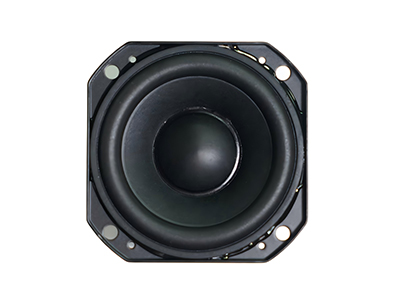
A ribbon tweeter uses a very thin metal strip—usually aluminum—as both the diaphragm and conductor.This ribbon is suspended between strong magnets,and when an audio signal passes through it,it vibrates directly in the magnetic field to produce sound.
Because the moving element is extremely light,ribbon tweeters are known for exceptional speed,detail,and low distortion.
The working principle is based on electromagnetic force(Lorentz force),where the current interacts with the magnetic field to generate motion.
A dome tweeter uses a small dome-shaped diaphragm made from materials such as silk,aluminum,or titanium.A voice coil attached to the dome moves it within a magnetic gap,producing sound.
This design is widely used in consumer and commercial audio systems due to its:
Durability
Lower cost
Ease of manufacturing
Stable performance across environments
Dome tweeters are considered the industry standard in most speaker systems.
Ribbon tweeters have extremely low mass,allowing instant response to audio signals.Dome tweeters are heavier due to the voice coil and suspension system,resulting in slightly slower transient response.
Ribbon tweeters provide highly detailed,airy,and precise treble reproduction.Dome tweeters offer smoother and more balanced sound that is easier to enjoy in everyday listening environments.
This is why people often ask whether are ribbon tweeters better for sound quality.
Ribbon tweeters typically offer wide horizontal dispersion but narrower vertical coverage.Dome tweeters provide more uniform dispersion in all directions,making them easier to position.
Dome tweeters are more rugged and can handle higher power loads.Ribbon tweeters are more delicate and require careful system matching.
The answer depends on usage.
Ribbon Tweeter Advantages:
Extremely detailed high-frequency reproduction
Fast transient response
Low distortion
Wide,open soundstage
Dome Tweeter Advantages:
High durability
Lower cost
Easier integration
More forgiving sound profile
So,are ribbon tweeters better?
They are better for precision and clarity,but not always better for durability or general-purpose use.
The best speakers with ribbon tweeters are typically found in high-end audio systems where accuracy and detail are prioritized over loudness or ruggedness.
Common applications include:
Audiophile bookshelf speakers
High-end floor-standing speakers
Studio monitor systems
Premium home theater setups
These systems use ribbon tweeters to achieve a wider soundstage and more realistic high-frequency reproduction.
Car ribbon tweeters are used in automotive audio systems to improve clarity in confined cabin spaces.
Benefits include:
Improved vocal clarity
Better stereo imaging
Smoother high-frequency response
They are often installed in A-pillars,dashboards,or custom door builds.Because vehicles introduce vibration and temperature challenges,car ribbon tweeters are often reinforced or hybrid-designed for durability.
Beyma ribbon tweeters are widely used in professional audio environments.
Beyma designs focus on:
High power handling
Professional-grade durability
Extended frequency response
These tweeters are commonly used in:
PA systems
Studio monitors
Live sound reinforcement systems
They combine ribbon clarity with industrial reliability,making them suitable for demanding applications.
Ribbon Tweeters:
High-end hi-fi systems
Studio monitors
Audiophile speakers
Advanced car audio systems
Dome Tweeters:
Home entertainment systems
Budget and mid-range speakers
Commercial audio setups
Portable speakers
Ribbon tweeters:detailed,airy,analytical,precise
Dome tweeters:warm,smooth,balanced,forgiving
This difference strongly influences listener preference depending on environment and music style.
✔Extremely detailed sound
✔Fast transient response
✔Low distortion
✖Fragile construction
✖Higher cost
✖Lower power handling
✔Durable and reliable
✔Cost-effective
✔Easy integration
✖Less micro-detail
✖Slightly slower response
Ribbon tweeters use a thin metal ribbon in a magnetic field,while dome tweeters use a dome-shaped diaphragm driven by a voice coil.
Ribbon tweeters are better for detail and clarity,while dome tweeters are better for durability and general use.
Because their diaphragm is extremely light,allowing faster response and lower distortion.
Yes,compared to dome tweeters,ribbon tweeters are more delicate and require careful handling.
They are used in high-end speakers,studio monitors,car audio systems,and professional sound systems.
They are typically found in audiophile-grade bookshelf speakers,floor-standing systems,and studio monitors.
They are used in professional audio systems like PA speakers and studio monitors due to their power handling and reliability.
Yes,car ribbon tweeters are used in high-end car audio systems to improve clarity and imaging,but they often require reinforced designs.
Copyright © 2026 Jiangxi ROXOUND Acoustic Technology Co. All rights reserved.


Privacy Policy Cookie Policy Terms and Conditions