


News
CHECK IT NOW


2026-08-08 16:27:59
When upgrading an audio system or replacing a damaged Speaker,knowing how to measure woofer size is an important step.Choosing the correct woofer size ensures proper installation,better sound performance,and compatibility with your speaker enclosure.Many people assume that woofer size only refers to the cone diameter,but professional measurement involves several dimensions,including frame diameter,cutout size,mounting depth,and voice coil specifications.
Whether you are selecting a woofer speaker,replacing a woofer driver,or working with a custom speaker manufacturer,accurate measurements help avoid installation problems and achieve the desired audio performance.
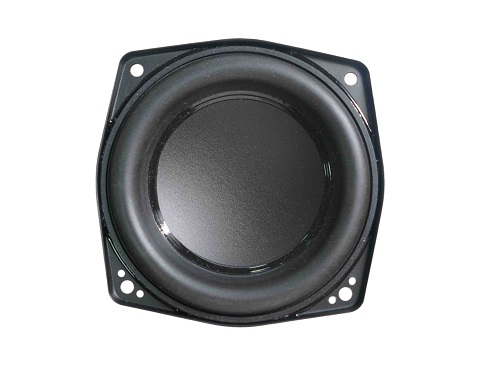
Woofer size usually refers to the diameter of the speaker cone or the overall size category of the woofer.Common woofer sizes include:
3-inch woofer
4-inch woofer
5-inch woofer
6.5-inch woofer
8-inch woofer
10-inch woofer
12-inch woofer
15-inch woofer
However,the actual installation size may be different from the advertised size.For example,a 6.5-inch woofer does not always have a mounting diameter of exactly 6.5 Inches.Manufacturers typically classify woofer sizes based on standard categories rather than exact measurements.
Correct measurement is essential for several reasons:
A woofer that is too large may not fit into the speaker cabinet,while a smaller woofer may leave gaps or require additional modifications.
The woofer size affects enclosure design,including air volume,Bass response,and overall sound quality.A properly matched woofer and cabinet can deliver deeper bass and better efficiency.
When replacing an existing driver,measuring the old woofer helps you find a compatible replacement without changing the entire speaker system.
The first measurement is the outside diameter of the woofer frame.
Use a ruler or measuring tape to measure:
The widest distance across the speaker basket
From one outer edge of the frame to the opposite edge
This measurement determines the physical size of the woofer.
For example:
Around 6.5 Inches→6.5-inch woofer category
Around 8 inches→8-inch woofer category
Do not measure only the cone surface because the cone diameter is usually smaller than the frame diameter.
The cutout diameter is the size of the opening required in the speaker cabinet.
To measure:
Remove the woofer from the enclosure.
Measure the hole diameter where the woofer sits.
Measure from the inside edge of the mounting opening.
This dimension is critical when installing a new woofer speaker driver because the replacement woofer must fit into the existing cabinet.
Mounting depth refers to how much space the woofer extends behind the mounting surface.
To measure:
Place a ruler vertically from the mounting flange to the deepest point of the woofer magnet.
Check the available space inside the enclosure.
A woofer with a large magnet structure may provide better power handling,but it also requires more installation space.
For accurate replacement,measure the distance between mounting holes.
There are two common methods:
Measure from the center of one mounting hole to the center of the opposite hole.
Measure diagonally for woofers with multiple mounting points.
This helps ensure that the screw holes align correctly.
Woofer size is not only about physical dimensions.Electrical specifications also affect performance.
Important parameters include:
The voice coil affects power handling and thermal performance.
Common sizes:
1-inch voice coil
1.5-inch voice coil
2-inch voice coil
3-inch voice coil
Common impedance options:
4 Ohm
8 Ohm
16 Ohm
Check:
RMS power
Peak power
A compatible power rating helps prevent distortion and damage.
Many people believe a larger woofer always produces better sound,but size is only one factor.
Advantages:
Compact design
Fast response
Suitable for small speakers
Good for mid-bass frequencies
Applications:
Desktop speakers
Portable audio systems
Bookshelf speakers
Advantages:
Balanced bass performance
Higher output capability
Suitable for home audio systems
Applications:
Home theater speakers
Professional audio equipment
Studio monitors
Advantages:
Strong bass output
Higher sound pressure level
Suitable for large spaces
Applications:
Stage speakers
PA systems
Professional sound systems
The cone is not the installation size.Always check the frame diameter and cutout size.
A woofer may have the correct diameter but still fail to fit because the magnet is too deep.
Two woofers with the same size can have very different sound characteristics due to differences in:
Magnet structure
Voice coil design
Sensitivity
Frequency response
When selecting a woofer,consider:
Different applications require different woofer characteristics:
Home audio
Automotive audio
Professional speakers
Musical instrument speakers
Commercial sound systems
A quality woofer should provide strong low-frequency response while maintaining clear sound reproduction.
The woofer should match the cabinet design,including:
Sealed enclosure
Bass reflex enclosure
Open-back design
For businesses requiring customized audio solutions,working with an experienced woofer speaker manufacturer can provide advantages such as customized impedance,size options,materials,and performance tuning.
Knowing how to measure woofer size helps you select the right speaker driver,avoid installation issues,and improve overall audio performance.The most important measurements include frame diameter,cutout diameter,mounting depth,and electrical specifications.
For companies looking for reliable audio components,choosing a professional woofer speaker supplier can ensure consistent quality,customized solutions,and better compatibility with different speaker systems.Accurate measurement combined with the right woofer design is the key to achieving powerful bass and high-quality sound reproduction.
No.Woofer size is usually classified by the overall speaker size category.For installation,you should measure the frame diameter,cutout diameter,and mounting depth.
Only if the new woofer fits the cabinet and matches the acoustic requirements.Changing woofer size may affect bass performance and sound balance.
6.5-inch and 8-inch woofers are widely used in home audio,professional speakers,and compact sound systems because they offer a good balance between size and performance
Copyright © 2026 Jiangxi ROXOUND Acoustic Technology Co. All rights reserved.


Privacy Policy Cookie Policy Terms and Conditions