


News
CHECK IT NOW


2026-08-11 18:46:24
Frequency response is one of the most important specifications when evaluating a Speaker Tweeter. It determines how accurately a tweeter can reproduce high-frequency signals and directly affects sound clarity, detail, and overall listening experience.
When comparing Ribbon Tweeter vs Dome Tweeter Frequency Response, speaker designers and audio manufacturers need to understand how different diaphragm structures influence high-frequency performance. Although both tweeter types are designed to reproduce Treble frequencies, their working principles create noticeable differences in response speed, accuracy, dispersion, and sound characteristics.
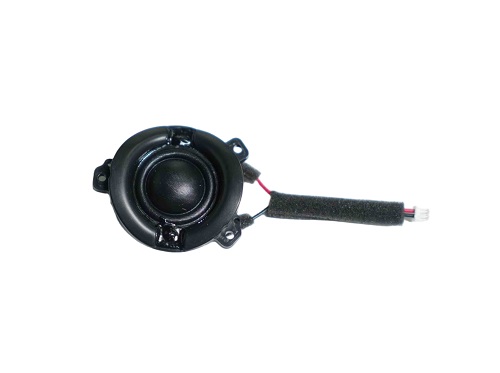
Tweeter frequency response refers to the range of high-frequency sounds that a tweeter can reproduce effectively. It is usually measured in Hertz (Hz) and shows how evenly the driver outputs different frequencies within its operating range.
A good frequency response means the tweeter can reproduce high-frequency details with minimal distortion or unwanted peaks and dips. For speaker manufacturers, frequency response is a key factor when designing Hi-Fi Speakers, studio monitors, home theater systems, and professional audio equipment.
Important factors affecting tweeter frequency response include:
Diaphragm material and weight
Magnetic system design
Voice coil structure
Damping characteristics
Speaker cabinet design
A Ribbon Tweeter uses an ultra-thin conductive ribbon diaphragm that moves directly within a magnetic field. Because the diaphragm has extremely low mass, it can respond quickly to changes in the audio signal.
This lightweight structure allows ribbon tweeters to achieve excellent high-frequency extension and fast transient response.
Extended High-Frequency Range: Ribbon tweeters can reproduce very high frequencies with excellent detail.
Fast Transient Response: The lightweight diaphragm reacts quickly to musical changes.
Low Distortion: Direct-drive movement helps reduce mechanical distortion.
High Detail Reproduction: Small audio details and subtle textures can be reproduced more accurately.
Because of these advantages, ribbon tweeters are commonly used in high-end Hi-Fi speakers, professional studio monitors, and premium audio systems where sound accuracy is a priority.
A Dome Tweeter uses a dome-shaped diaphragm made from materials such as silk, fabric, aluminum, titanium, or composite materials.
The dome structure provides a good balance between rigidity, damping, and efficiency. Modern dome tweeters can achieve excellent frequency response performance while maintaining reliability and production flexibility.
Smooth High-Frequency Output: Dome tweeters provide balanced and natural treble reproduction.
Wide Application Range: They are suitable for home audio, automotive speakers, and commercial sound systems.
Stable Performance: Mature manufacturing technology ensures consistent quality.
Good Dispersion: Dome designs usually provide wider listening coverage.
| Feature | Ribbon Tweeter | Dome Tweeter |
|---|---|---|
| Diaphragm | Ultra-thin ribbon structure | Dome-shaped diaphragm |
| Response Speed | Very fast due to low moving mass | Balanced response |
| High-Frequency Detail | Excellent micro-detail reproduction | Smooth and natural sound |
| Distortion | Very low distortion potential | Low distortion with optimized design |
| Dispersion | More controlled directional response | Generally wider dispersion |
| Applications | High-end audio, studio monitors | Home audio, automotive, OEM speakers |
There is no universal answer when choosing between ribbon tweeters and dome tweeters. The right choice depends on the speaker application, target customers, and product requirements.
Premium Hi-Fi speaker systems
Professional recording monitors
Audiophile products
High-resolution audio applications
Custom speaker projects requiring detailed sound reproduction
Mass-production speaker systems
Home entertainment products
Automotive audio
Commercial speakers
Cost-effective OEM speaker solutions
Professional speaker manufacturers use multiple methods to improve tweeter frequency response and overall sound performance.
Selecting suitable diaphragm materials
Optimizing magnetic circuit design
Adjusting damping materials
Improving crossover network design
Testing frequency curves with professional equipment
For OEM speaker projects, working with an experienced tweeter manufacturer helps ensure the tweeter design matches the final speaker system requirements.
Ribbon tweeters usually provide faster response and excellent high-frequency detail because of their lightweight diaphragm. However, dome tweeters can provide smoother and more balanced performance depending on the application.
The ideal tweeter frequency range depends on the speaker design. Many tweeters operate from several thousand Hertz to beyond the audible range, but performance depends on the overall system design.
Ribbon tweeters are often selected for high-resolution studio monitoring because of their detail and fast response. However, high-quality dome tweeters are also widely used in professional monitors.
Copyright © 2026 Jiangxi ROXOUND Acoustic Technology Co. All rights reserved.


Privacy Policy Cookie Policy Terms and Conditions