






Yes, woofers can be used as part of a Speaker system, but a woofer alone does not always provide the full range of sound required for general audio playback. A woofer is designed primarily to reproduce low and lower-midrange frequencies. For a complete listening experience, it is usually combined with other drivers, such as Tweeters, or used in a system designed specifically around its frequency response.
For audio equipment manufacturers, speaker brands, and wholesale buyers, understanding the difference between a woofer and a complete speaker helps with driver selection, product development, and system integration.
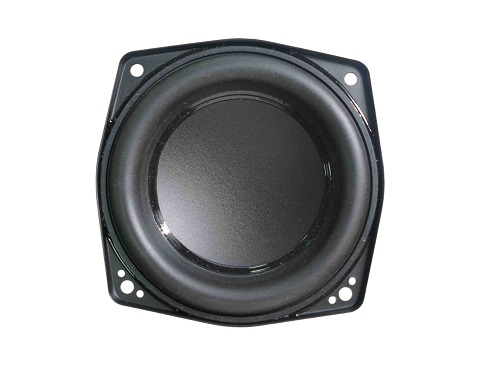
1. What Is the Difference Between a Woofer and a Speaker?
A speaker is a general term for an audio transducer or, in everyday usage, a complete sound-reproducing unit. A woofer is a type of speaker driver designed to handle lower frequencies.
| Feature | Woofer | Complete Speaker System |
|---|---|---|
| Main function | Reproduces low and lower-midrange frequencies | Reproduces a broader range of audio frequencies |
| Frequency coverage | Depends on driver design and enclosure | Depends on the drivers and crossover configuration |
| Typical configuration | Single low-frequency driver | One or more drivers in an enclosure |
| High-frequency reproduction | Usually limited compared with a tweeter | Can use a dedicated tweeter or full-range driver |
2. What Happens If You Use a Woofer on Its Own?
A woofer can produce audible sound when connected to a suitable amplifier, provided the driver is designed for that use. However, its output may not cover the full audible frequency range evenly.
Strong Low-Frequency Output
Woofers are designed to reproduce Bass and lower-frequency sounds. Depending on their design, they can deliver the low-end impact required for music, multimedia audio, and other sound applications.
Limited High-Frequency Detail
Many woofers cannot reproduce high frequencies as effectively as dedicated tweeters. Using one alone may result in reduced Treble detail and less balanced sound, particularly when listening to music or content with a wide frequency range.
Performance Depends on the Driver
Not all woofers perform the same way. Some drivers can reproduce a useful portion of the midrange, while others are optimized for lower frequencies. The actual result depends on the driver's frequency response, cone characteristics, enclosure, and electrical configuration.
3. Can a Woofer Replace a Full-Range Speaker?
A woofer can serve as the only driver in certain specialized applications, but it is not automatically a direct replacement for a full-range speaker. If the application requires clear vocals, detailed high frequencies, and balanced music playback, a woofer may need to be combined with a midrange driver or tweeter.
For example, a two-way speaker commonly combines a woofer with a tweeter. A crossover directs appropriate frequency ranges to each driver, helping the system reproduce a broader range of sound. The crossover frequency and driver characteristics must be carefully matched to avoid response gaps or excessive overlap.
In contrast, some compact or purpose-built audio products may use a single driver when simplicity, size, cost, or a limited frequency range is more important than full-range reproduction.
4. How to Connect a Woofer for Speaker Use
Before using a woofer in a speaker system, consider the following technical requirements:
Amplifier compatibility: Check the woofer's nominal impedance and power-handling ratings against the amplifier's supported load and output.
Enclosure design: Choose an appropriate sealed, ported, or other suitable enclosure based on the driver's specifications.
Crossover configuration: If the woofer is paired with other drivers, select an appropriate crossover design and frequency range.
Frequency response: Confirm that the woofer can reproduce the frequencies required by the application.
System testing: Test the complete speaker assembly for sound balance, distortion, thermal performance, and mechanical reliability.
Connecting a woofer directly to an amplifier may work in some applications, but it does not guarantee optimal sound quality. Proper system matching is essential for safe operation and consistent performance.
5. How to Choose a Woofer for Speaker Manufacturing
For speaker manufacturers and B2B buyers, selecting a woofer involves more than comparing driver diameter or power ratings. A suitable component must match the target product design and manufacturing requirements.
Application: Identify whether the driver is intended for home audio, multimedia speakers, car audio, professional equipment, or another application.
Technical specifications: Compare frequency response, impedance, sensitivity, rated power, and mounting dimensions.
Acoustic integration: Evaluate compatibility with the enclosure, amplifier, crossover, and other drivers.
Product consistency: Confirm that the supplier can maintain consistent specifications and quality across production batches.
OEM and ODM support: For customized speaker products, discuss driver dimensions, material options, acoustic targets, and production requirements with the manufacturer.
Requesting samples and evaluating them in the intended enclosure can help buyers verify performance before moving to mass production. Clear specifications also reduce the risk of mismatches during speaker assembly.
6. Frequently Asked Questions
Can I play music using only a woofer?
Yes, a woofer can play music if it is connected to a compatible amplifier. However, the sound may lack high-frequency detail because most woofers are optimized for lower frequencies rather than full-range reproduction.
Can a woofer produce vocals?
A woofer can reproduce some vocal frequencies, depending on its design and operating range. However, vocal clarity may be limited if the driver cannot reproduce the required midrange frequencies accurately.
Do woofers need a tweeter?
A woofer does not always need a tweeter to produce sound. However, a tweeter is commonly added when a speaker system needs better high-frequency reproduction and a more balanced overall response.
Can I connect a woofer directly to an amplifier?
Yes, if the amplifier is compatible with the woofer's impedance and power requirements. For the best results, the enclosure and any necessary crossover components should also be selected according to the driver's specifications.
Is a woofer the same as a subwoofer?
No. A woofer typically handles low and lower-midrange frequencies, while a subwoofer is designed for deeper bass reproduction. The exact frequency ranges vary by product and system design.
Woofers can be used as sound-producing drivers, but whether they can replace a complete speaker depends on the application and the required frequency range. For bass-focused products, a woofer may be sufficient. For balanced music playback and full-range audio, combining a woofer with a tweeter or other drivers is often a better solution. Selecting the right driver, enclosure, amplifier, and crossover helps achieve reliable performance in both custom and mass-produced speaker systems.