






For loudSpeaker manufacturers and audio equipment brands, ribbon Tweeter frequency response is an important consideration when selecting high-frequency drivers for a new product. A Tweeter must work effectively within the intended frequency range while maintaining suitable sensitivity, impedance characteristics, and consistency across production batches.
However, frequency response is not determined by a single component. Diaphragm design, magnetic structure, mechanical assembly, crossover settings, and the acoustic environment can all influence the measured result. Understanding these factors helps OEM buyers evaluate samples, communicate technical requirements, and select a suitable ribbon tweeter manufacturer for long-term supply.
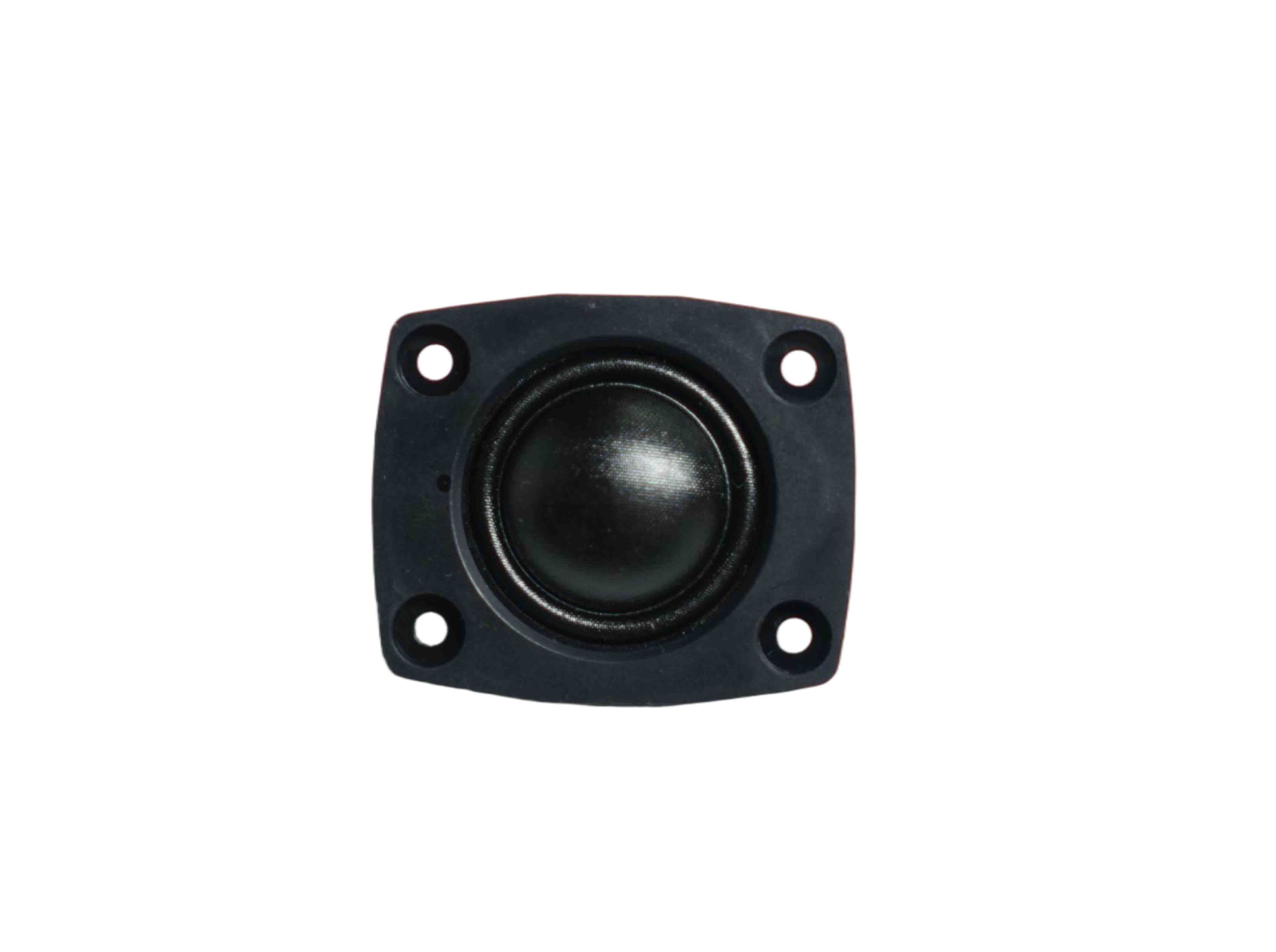
1. Diaphragm Material, Thickness, and Dimensions
The diaphragm is one of the most important elements in a ribbon tweeter. Its material properties, thickness, width, length, and overall geometry influence how it responds to an electrical signal and produces sound.
Material properties: Conductivity, density, stiffness, and mechanical durability affect diaphragm behavior and design possibilities.
Diaphragm dimensions: The effective radiating area and geometry influence operating characteristics and the frequency range that can be achieved.
Mechanical uniformity: Consistent dimensions and forming quality help reduce unwanted variation between individual drivers.
For buyers sourcing custom ribbon tweeters, diaphragm specifications should be evaluated alongside the complete driver's measured performance. A material or dimensional change may affect more than one acoustic characteristic, so prototype testing is important before approving a design for mass production.
2. Magnetic Structure and Drive-System Design
The magnetic assembly provides the magnetic field required by the driver's operating principle. Its configuration, field distribution, and manufacturing accuracy influence how effectively the diaphragm responds to the input signal.
Important design considerations include:
Magnetic field strength and uniformity across the active diaphragm area.
Magnet positioning and dimensional tolerances.
Mechanical alignment between the diaphragm and magnetic assembly.
Structural stability during assembly and subsequent handling.
These factors should be considered together rather than evaluated in isolation. A well-designed magnetic system must work with the diaphragm and the rest of the acoustic structure to achieve the intended ribbon tweeter performance.
3. Diaphragm Tension, Alignment, and Assembly Accuracy
For ribbon designs that use a tensioned diaphragm, tension and alignment are important manufacturing variables. Inconsistent tension, uneven positioning, or dimensional deviations can change the driver's mechanical behavior and affect unit-to-unit repeatability.
During production, manufacturers should establish suitable assembly procedures and inspection criteria for the specific design. Depending on the construction, these may include diaphragm positioning, tension control, electrical connection integrity, and dimensional inspection.
For B2B buyers, the key question is not simply whether a sample performs well. It is whether the manufacturer can reproduce the approved design consistently across repeat orders. This makes process control an important part of ribbon tweeter design and supplier evaluation.
4. Impedance and Electrical Characteristics
Impedance affects how a tweeter interacts with the amplifier and crossover network. The actual electrical behavior depends on the driver's construction and operating frequency, so buyers should review the impedance specification and, where available, the measured impedance curve.
When evaluating a potential supplier, confirm the following:
Nominal impedance and the specified measurement conditions.
Impedance variation across the intended operating range.
Compatibility with the target amplifier and crossover network.
Any electrical or thermal limitations relevant to the application.
Impedance alone does not determine frequency response. However, overlooking electrical compatibility can complicate system integration and affect the behavior of the complete loudspeaker. For OEM projects, confirm the required impedance before finalizing the driver specification.
5. Crossover Design and System Integration
Even a well-engineered tweeter can perform differently when integrated into different loudspeaker systems. The crossover network determines the signal delivered to the tweeter, while the Woofer, enclosure, baffle, and driver positioning influence the combined acoustic response.
During crossover design, engineers should consider:
The tweeter's measured frequency response and recommended operating range.
The woofer's upper-frequency behavior and the intended crossover region.
Relative sensitivity, phase behavior, and acoustic integration.
Potential response variations caused by the baffle and listening angle.
For procurement teams, it is useful to share the intended loudspeaker configuration with the supplier instead of requesting a tweeter based on a single frequency-range figure. This helps the engineering team assess whether the proposed driver is appropriate for the actual application.
6. Measurement Conditions and Test Methods
Frequency response data is only useful when the measurement conditions are understood. Microphone position, measurement distance, acoustic environment, measurement angle, signal level, and data-processing methods can all affect the reported curve.
When comparing samples from different suppliers, ask whether the measurements were obtained under comparable conditions. Useful documentation may include:
Frequency response curves with clearly stated test conditions.
Impedance measurements and relevant electrical specifications.
Sensitivity data with the reference voltage or power and distance identified.
Distortion measurements where required by the application.
Sample identification and test records for traceability.
A smooth curve is not automatically proof of superior performance in every application. The appropriate response depends on the product requirements, target sound characteristics, and complete speaker-system design.
7. Manufacturing Tolerances and Batch Consistency
For commercial loudspeaker production, repeatability can be just as important as the performance of an individual sample. Variations in materials, component dimensions, assembly alignment, and inspection methods may lead to differences between production units.
A qualified ribbon tweeter manufacturer should be able to explain how critical characteristics are controlled and how finished products are checked against agreed specifications.
Before placing a bulk order, buyers should clarify:
Which performance parameters are included in the product specification.
Whether acceptance limits for frequency response and other key characteristics can be agreed in advance.
How samples and production batches are identified and inspected.
How nonconforming products and specification changes are handled.
These discussions are particularly important for OEM programs that require stable performance over multiple production runs.
8. How to Evaluate Ribbon Tweeter Frequency Response Before Ordering
Buyers can use the following process to reduce uncertainty during supplier evaluation and product development.
Define the application: Identify the target speaker type, intended operating range, system configuration, and required performance.
Confirm the specifications: Request the relevant electrical and acoustic parameters, including frequency response, impedance, and sensitivity.
Review measurement conditions: Make sure competing samples are assessed using comparable test methods.
Test prototypes: Evaluate the driver in the intended crossover and loudspeaker configuration.
Approve acceptance criteria: Agree on the critical parameters and tolerances before production approval.
Verify production consistency: Discuss inspection records, batch controls, and procedures for handling deviations.
This approach helps purchasing and engineering teams make decisions based on measurable requirements rather than a single headline specification.
Why Work with an OEM Ribbon Tweeter Supplier?
For loudspeaker brands and audio equipment manufacturers, the right supplier should offer more than a product catalog. Technical communication, prototype evaluation, specification confirmation, and consistent manufacturing are important throughout the sourcing process.
When evaluating an OEM ribbon tweeter project, buyers should discuss dimensional requirements, electrical compatibility, target acoustic performance, installation constraints, expected order quantities, and delivery schedules.
Sharing these requirements early helps determine whether an existing model is suitable or whether a customized solution should be evaluated. Final specifications and production acceptance criteria should be confirmed through technical review and sample validation.
Looking for a ribbon tweeter solution for your next loudspeaker project? Contact our team to discuss your application, technical requirements, customization needs, and bulk purchasing plans.
Frequently Asked Questions
1. What determines the frequency response of a ribbon tweeter?
Frequency response depends on diaphragm material and geometry, magnetic structure, mechanical assembly, electrical characteristics, and the acoustic environment. The final response also depends on how the tweeter is integrated into the loudspeaker system.
2. Does a wider frequency range always mean a better ribbon tweeter?
No. A wider specified range does not necessarily mean that a driver is more suitable for a particular project. Buyers should also evaluate response smoothness, distortion, sensitivity, impedance, operating limits, and performance within the intended system.
3. How can buyers compare ribbon tweeter frequency response data?
Compare measurements taken under similar conditions, including microphone position, measurement distance, acoustic environment, and signal level. Review the complete response curve rather than relying only on the minimum and maximum frequency figures.
4. Can ribbon tweeter frequency response be customized?
Potentially, depending on the driver's architecture and the manufacturer's capabilities. Customization may involve diaphragm dimensions, magnetic structure, installation requirements, or system integration. Any proposed changes should be verified through prototype measurements.
5. What should OEM buyers confirm before bulk production?
Confirm the approved specifications, acceptance tolerances, test methods, sample approval procedure, production inspection requirements, order quantity, and delivery schedule. Clear agreements help reduce uncertainty and support consistent repeat orders.