






For loudSpeaker brands, audio equipment manufacturers, and OEM buyers, understanding the ribbon Tweeter manufacturing process is an important step in supplier evaluation. Production quality affects not only the acoustic performance of an individual driver but also the consistency, reliability, and repeatability required for commercial loudspeaker production.
Unlike conventional dome designs, ribbon Tweeters use a thin conductive diaphragm or a related ribbon-type structure to generate sound within a magnetic field. The specific construction varies by product design, which means manufacturing methods, assembly requirements, and inspection procedures may differ between suppliers.
This guide explains the main production stages, the quality checkpoints buyers should understand, and what to confirm before placing an OEM or bulk order.
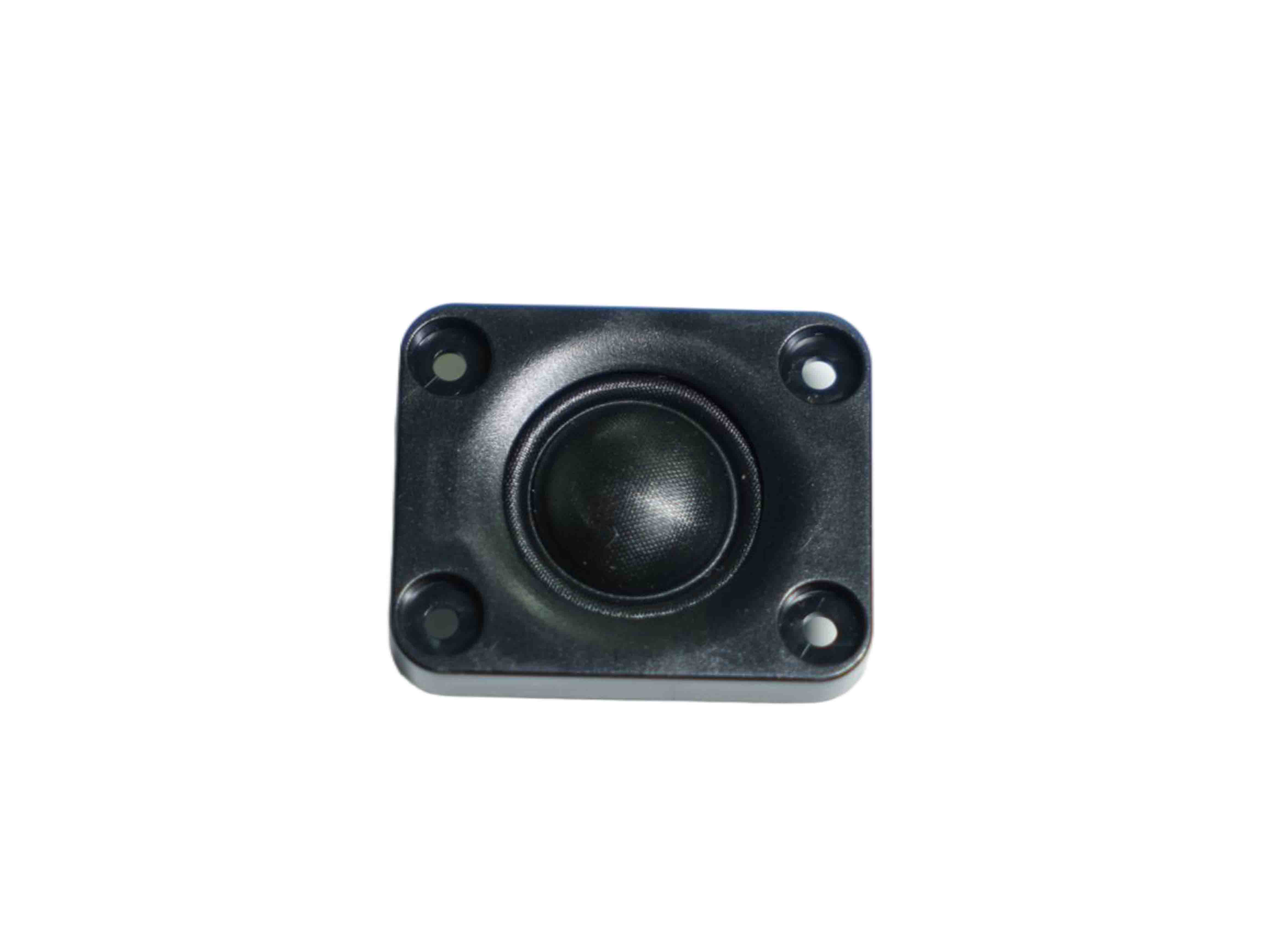
1. Product Design and Technical Specification Confirmation
Before manufacturing begins, the supplier and buyer need to establish the technical requirements for the intended application. This stage helps prevent specification mismatches and unnecessary changes during prototype development or mass production.
Typical requirements include:
Target frequency response and intended operating range.
Nominal impedance and sensitivity requirements.
Diaphragm dimensions and material requirements.
Magnetic structure and overall driver dimensions.
Mounting method, terminal configuration, and installation constraints.
Expected order volume, packaging requirements, and delivery schedule.
For an OEM ribbon tweeter project, buyers should also clarify whether they need an existing model, a modified design, or a new product developed around specific acoustic and mechanical requirements.
At this stage, engineering teams can review feasibility, identify potential design constraints, and establish the measurements required for sample approval.
2. Diaphragm Material Preparation and Processing
The diaphragm is a critical component in ribbon tweeter construction. Its material, dimensions, surface condition, and mechanical properties must suit the intended design.
Depending on the product architecture, diaphragm preparation may involve material inspection, precision cutting, forming, or other specialized processing operations.
Key quality considerations include:
Dimensional accuracy: The diaphragm must meet the specified geometry and fit the designed assembly.
Material consistency: Material variations should be controlled according to the product specification.
Surface condition: Visible damage, contamination, or defects may affect subsequent processing or product reliability.
Process repeatability: Preparation methods should produce consistent components across production batches.
For buyers, it is useful to ask how incoming materials and processed diaphragms are inspected. The appropriate inspection method depends on the material, component geometry, and design requirements.
3. Magnetic Assembly Preparation
The magnetic assembly creates the magnetic field required for the diaphragm to operate. Depending on the design, it may include permanent magnets, structural components, and precision locating features.
Manufacturing considerations can include:
Magnet specifications and component verification.
Positioning and alignment of magnetic components.
Dimensional accuracy of the supporting structure.
Assembly stability and consistency.
Magnetic performance and geometry must be appropriate for the intended diaphragm and driver configuration. A change in magnet arrangement or structural dimensions may require engineering review and additional performance testing.
When assessing a ribbon tweeter manufacturer, buyers should look for a clear explanation of how the magnetic assembly is controlled and how the finished driver is verified against its approved specification.
4. Diaphragm Installation and Electrical Connections
After component preparation, the diaphragm is integrated with the relevant supporting and magnetic structures. The exact assembly sequence depends on whether the design uses a tensioned ribbon, a supported diaphragm, or another related configuration.
For applicable designs, important assembly controls may include:
Diaphragm positioning and alignment.
Tension control where the construction requires it.
Secure electrical connections and suitable contact resistance.
Prevention of damage during handling and installation.
Verification of mechanical clearances and structural stability.
These operations require suitable tooling, trained operators, and repeatable work instructions. Even when individual components meet their dimensional specifications, assembly variation can still affect the finished product.
For B2B buyers, the key issue is whether the manufacturer can consistently reproduce the approved sample under normal production conditions.
5. Driver Assembly and Final Mechanical Inspection
Once the main functional components are assembled, the remaining housing, frame, terminals, and other design-specific parts are integrated as required.
Mechanical inspection may cover overall dimensions, mounting-hole positions, terminal condition, component alignment, and visible workmanship. Electrical continuity checks may also be appropriate at this stage.
These checks are particularly relevant when the tweeter must fit a customer's existing enclosure or a new loudspeaker platform with limited installation space.
Before approving production, buyers should confirm the dimensional drawing and any critical fit requirements. If the product is customized, the approved drawing and sample should serve as clear references for subsequent orders.
6. Acoustic and Electrical Performance Testing
After assembly, the finished driver should be evaluated against the agreed technical specification. The exact tests depend on the product, application, and customer's quality requirements.
Common evaluation items may include:
Frequency response testing: Checks the measured acoustic output across the specified frequency range.
Impedance testing: Evaluates electrical behavior across the relevant frequency range or at defined test points.
Sensitivity measurement: Assesses acoustic output under clearly defined reference conditions.
Distortion testing: Evaluates nonlinear behavior when required by the application.
Functional inspection: Checks for abnormal noise, connection issues, or other defined defects.
Frequency response testing is particularly useful for confirming whether the finished product meets the agreed acoustic requirements. However, results depend on measurement conditions, equipment, and test methods, so these should be documented when establishing acceptance criteria.
For an OEM ribbon tweeter order, buyers should confirm which tests are performed on every unit, which are conducted on a sampling basis, and which are reserved for prototype or engineering validation.
7. Quality Control and Production Consistency
Quality control should extend beyond final inspection. A structured quality process considers incoming materials, component preparation, assembly operations, and finished-product verification.
For commercial buyers, useful supplier evaluation points include:
Documented product specifications and inspection criteria.
Traceability for relevant materials, components, and production batches.
Defined procedures for identifying and handling nonconforming products.
Inspection records for agreed critical performance parameters.
Change-control procedures for materials, components, and manufacturing processes.
Batch consistency matters when a loudspeaker brand places repeat orders or uses multiple drivers in the same product range. Differences between production runs may create additional testing, assembly, or system-adjustment work for the buyer.
When evaluating ribbon tweeter production capabilities, ask the supplier how it maintains consistency between the approved sample and subsequent manufacturing batches. Request supporting quality records where appropriate rather than relying only on general quality claims.
8. Packaging and Preparation for Shipment
Once the finished products have passed the required inspections, they are prepared for storage and shipment. Packaging requirements depend on the driver design, product value, shipping method, and destination.
For bulk orders, purchasing teams should confirm:
Individual and outer-carton packaging requirements.
Protection against impact, vibration, dust, and handling damage as appropriate.
Product identification, labeling, and carton quantities.
Order quantity, shipment schedule, and export documentation requirements.
Packaging should protect the assembled driver and help maintain product identification throughout transportation and receiving inspection. Buyers with special labeling or packaging requirements should communicate them before mass production.
9. What Should Buyers Check Before Ordering Ribbon Tweeters in Bulk?
Understanding the manufacturing process is useful, but the final purchasing decision should also consider technical suitability, production reliability, and the supplier's ability to meet commercial requirements.
Technical compatibility: Confirm that the driver matches the target speaker system, including impedance, sensitivity, frequency response, and mounting dimensions.
Sample approval: Evaluate representative samples and document the approved technical specifications.
Quality requirements: Agree on test methods, acceptance limits, inspection frequency, and handling of nonconforming products.
Production capacity: Discuss the expected order quantity, manufacturing lead time, and the supplier's ability to support repeat orders.
Customization: Confirm whether the supplier can accommodate required dimensions, electrical specifications, packaging, or other project-specific needs.
Commercial terms: Clarify MOQ, payment terms, delivery arrangements, and procedures for engineering changes.
These checks help purchasing teams compare suppliers using criteria that matter to the finished product and the wider supply chain.
10. Why Manufacturing Capability Matters for OEM Projects
For loudspeaker brands and audio equipment manufacturers, selecting a supplier involves more than finding a driver with a suitable specification. The supplier must also understand the intended application, communicate technical limitations, support sample validation, and manufacture products in accordance with the approved requirements.
A capable ribbon tweeter manufacturer should be prepared to discuss product design, material selection, assembly requirements, acoustic testing, quality documentation, and production planning.
For customized projects, early technical communication is particularly important. Sharing drawings, target performance requirements, installation constraints, estimated annual demand, and expected launch schedules helps both parties evaluate feasibility before committing to tooling or mass production.
If your company is sourcing ribbon tweeters for a new loudspeaker model or an ongoing production program, contact our team to discuss your specifications, sample requirements, customization options, and bulk order plans.
Frequently Asked Questions
1. What are the main steps in the ribbon tweeter manufacturing process?
A typical process includes technical specification confirmation, diaphragm preparation, magnetic assembly preparation, component assembly, mechanical inspection, acoustic and electrical testing, quality verification, and packaging. The exact sequence varies by product architecture and manufacturing method.
2. How do manufacturers test ribbon tweeter quality?
Depending on the product specification, testing may include frequency response, impedance, sensitivity, distortion, electrical continuity, and mechanical inspection. Buyers should confirm the actual test methods and acceptance criteria with the supplier.
3. Can ribbon tweeters be customized for OEM projects?
Customization may be possible depending on the manufacturer's design and production capabilities. Buyers should provide the intended application, target acoustic performance, electrical requirements, mounting dimensions, and estimated order volume for a feasibility review.
4. What should buyers request before placing a bulk order?
Useful documents and records may include a technical datasheet, dimensional drawing, sample test report, approved product specification, quality inspection criteria, and production schedule. The required documentation should be agreed upon according to the project's complexity.
5. How can buyers ensure consistent quality across repeat orders?
Establish an approved reference sample, document critical specifications, agree on inspection methods and tolerances, and confirm how production changes are controlled. Batch identification and suitable inspection records can also help support traceability.
6. What factors affect ribbon tweeter manufacturing lead time?
Lead time may depend on product complexity, material availability, tooling or design changes, sample approval, production scheduling, inspection requirements, and order quantity. Buyers should confirm the expected timeline with the manufacturer before placing an order.