


News
CHECK IT NOW


2026-06-11 14:20:58
In the world of audio systems,one component plays a critical role in delivering the crisp,high-frequency sounds that bring music and movies to life:the Tweeter.Whether you are an audiophile,a home theater enthusiast,or a casual listener,understanding what a tweeter is,how it works,and its applications can significantly enhance your audio experience.In this article,we will explore the principles,functions,types,applications,and comparisons with similar audio components,along with frequently asked questions to provide a comprehensive guide.
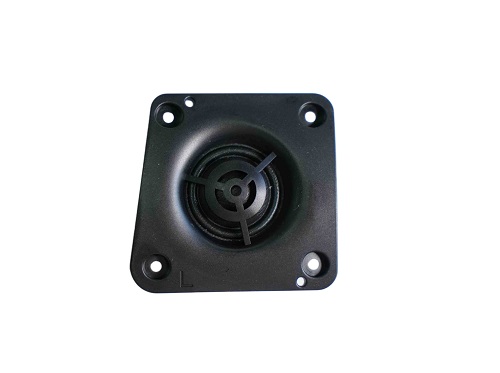
A tweeter is a type of loudSpeaker specifically designed to reproduce high-frequency sounds.These frequencies typically range from 2 kHz to 20 kHz,covering the upper end of the human hearing spectrum.High-frequency sounds include details such as cymbals,flutes,and the subtle harmonics of voices and instruments.
In a complete audio system,tweeters work alongside woofers and mid-range drivers to ensure a full,balanced sound.While woofers handle the low frequencies(bass)and mid-range drivers cover the middle frequencies,tweeters are responsible for the"sparkle"and clarity of the sound.
Tweeters operate based on a relatively simple principle:converting electrical audio signals into sound waves.However,their design is optimized for high-frequency performance.
The diaphragm of a tweeter is much smaller and lighter than that of a woofer.This allows it to vibrate quickly,producing high-pitched sounds with precision.The faster the diaphragm can move back and forth,the higher the frequency it can generate.
Tweeters generally use a voice coil attached to the diaphragm,placed within a magnetic field.When an audio signal passes through the coil,it creates a changing magnetic field that causes the diaphragm to move,producing sound waves.
Many tweeters incorporate special designs such as dome-shaped diaphragms,ribbons,or horns to enhance sound dispersion and efficiency.These designs help direct high-frequency sound accurately throughout a room.
Tweeters play a crucial role in the overall audio system:
Clarity and Detail:They reproduce subtle nuances in music,such as the shimmer of a cymbal or the breathiness of a singer’s voice.
Spatial Imaging:Tweeters help create a sense of space and depth in sound,allowing listeners to distinguish the position of instruments in a stereo field.
Frequency Balance:By handling high frequencies,tweeters allow mid-range drivers and woofers to perform more efficiently without distortion.
Enhanced Listening Experience:A good tweeter can transform a flat,dull sound into a lively,immersive experience.
Tweeters are used in a wide variety of audio systems and environments:
Tweeters are integral to home theater speakers,soundbars,and bookshelf speakers,delivering crisp dialogue and musical detail.
High-end car speakers use tweeters to provide clear Treble tones and improve the overall sound stage inside a vehicle.
Recording studios,concert halls,and PA systems rely on tweeters to ensure high-frequency accuracy for music production and live sound.
Tweeters are also found in compact devices such as Bluetooth Speakers,though with limitations in size and frequency range.
Tweeters come in various types,each with unique characteristics:
The most common type,dome tweeters have a dome-shaped diaphragm that provides wide dispersion and smooth frequency response.
Less common,these use a cone-shaped diaphragm,usually offering directional sound but with a more pronounced presence in certain frequencies.
Use a thin metal ribbon as a diaphragm.Ribbon tweeters are highly responsive and produce extremely accurate,detailed high frequencies but are generally delicate.
Incorporate a horn to amplify the sound and improve efficiency.Often used in professional sound reinforcement.
Utilize piezoelectric materials to generate sound,often found in low-cost applications and smaller devices.
Understanding the difference between tweeters and other loudspeaker components helps clarify their role:
| Component | Frequency Range | Function | Typical Use |
| Woofer | 20 Hz – 2 kHz | Low frequencies (bass) | Subwoofers, floor-standing speakers |
| Mid-range Driver | 200 Hz – 5 kHz | Middle frequencies (vocals, instruments) | Bookshelf, home theater speakers |
| Tweeter | 2 kHz – 20 kHz | High frequencies (treble, details) | All types of speaker systems |
Tweeters are not designed to reproduce bass or mid-range sounds.Using them outside their frequency range can cause distortion or even damage.
Selecting the right tweeter depends on several factors:
Frequency Response:Look for a tweeter that covers the desired high-frequency range without harsh peaks.
Power Handling:Ensure the tweeter can handle the amplifier’s output without distortion.
Dispersion Pattern:Wide-dispersion tweeters provide a more uniform sound across the room,while narrow-dispersion tweeters focus sound in a specific direction.
Compatibility:Match the tweeter with the other speakers in your system for seamless integration.
A1:Tweeters are designed to handle only high frequencies.Using a tweeter alone will result in a very thin sound lacking bass and midrange tones.They work best in combination with woofers and mid-range drivers.
A2:A super tweeter is designed to reproduce frequencies above 20 kHz,beyond the normal human hearing range.They are often used in high-end audio systems to enhance overtones and harmonics.
A3:Signs of a damaged tweeter include distorted high-frequency sounds,buzzing,or complete silence in treble ranges.Physical damage to the diaphragm or voice coil may require replacement.
A4:Not necessarily.Expensive tweeters may offer more precision,materials,or aesthetic value,but performance should be evaluated in the context of the entire audio system.
A5:Yes,but you must consider impedance,power handling,and frequency response to ensure compatibility with your existing system.
Copyright © 2026 Jiangxi ROXOUND Acoustic Technology Co. All rights reserved.


Privacy Policy Cookie Policy Terms and Conditions