


News
CHECK IT NOW


2026-06-11 14:48:18
A Tweeter is a specialized loudSpeaker driver designed to reproduce high-frequency sounds,typically ranging from 2,000 Hz(2 kHz)to 20,000 Hz(20 kHz).These high frequencies include the crisp details in music and audio,such as cymbals,violins,female vocals,and other treble-rich sounds.Tweeters play a crucial role in delivering clear,detailed,and realistic audio reproduction.
In this article,we'll explain how a tweeter works,its key components,operating principles,and why it is essential in modern speaker systems.
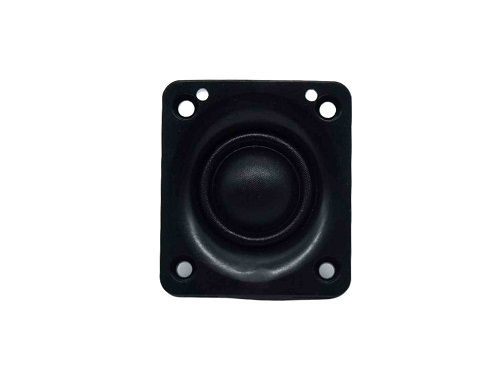
A tweeter is the smallest driver in most speaker systems and is specifically engineered to handle high-frequency audio signals.Since high frequencies require rapid vibrations to produce sound waves,tweeters are built with lightweight materials and compact diaphragms that can move extremely fast and accurately.
Tweeters are commonly found in:
Home theater speakers
Bookshelf speakers
Floor-standing speakers
Car audio systems
Studio monitors
Portable sound systems
Like other loudspeaker drivers,a tweeter converts electrical energy into sound energy.
The process can be broken down into four basic steps:
When music or audio is played,the amplifier sends an electrical signal to the speaker system.
A crossover network separates the frequencies and directs only the high-frequency signals to the tweeter.
Without a crossover,low-frequency signals could damage the tweeter because it is not designed to handle large diaphragm movements.
Inside the tweeter is a component called the voice coil,which is attached to the diaphragm.
As the audio signal passes through the voice coil,it generates a changing electromagnetic field.
The voice coil sits within a permanent magnetic field created by a powerful magnet.
The interaction between these magnetic fields causes the voice coil to move back and forth.
The voice coil is connected directly to a lightweight diaphragm.
As the voice coil moves,it pushes and pulls the diaphragm.
Because tweeters reproduce very high frequencies,the diaphragm must vibrate thousands of times per second.
For example:
A 5 kHz sound requires 5,000 vibrations per second.
A 15 kHz sound requires 15,000 vibrations per second.
This is why tweeter diaphragms are made from lightweight materials such as:
Silk
Aluminum
Titanium
Beryllium
Polyester films
The rapid movement of the diaphragm creates pressure changes in the surrounding air.
These pressure variations travel as sound waves and are perceived by our ears as high-frequency sounds.
The accuracy of these vibrations directly affects sound clarity,detail,and imaging.
The diaphragm is the moving surface that produces sound.
Its design significantly affects sound quality.
Common diaphragm materials include:
| Material | Characteristics |
| Silk | Smooth, warm sound |
| Aluminum | Detailed, bright sound |
| Titanium | Strong and dynamic |
| Beryllium | Extremely lightweight and accurate |
The voice coil receives electrical signals and converts them into mechanical motion.
A lighter voice coil generally improves high-frequency response.
The magnet creates the magnetic field necessary for the voice coil to move.
Strong magnets improve efficiency and responsiveness.
Common magnet materials include:
Ferrite
Neodymium
Ceramic magnets
The suspension keeps the diaphragm centered and controls its movement.
It helps maintain sound accuracy and prevents distortion.
High-frequency sounds have very short wavelengths.
To reproduce them accurately,the moving parts of the speaker must be:
Small
Lightweight
Fast
Large drivers,such as woofers,cannot move quickly enough to reproduce high frequencies efficiently.
This is why speaker systems use separate drivers for different frequency ranges.
A crossover is one of the most important components in a speaker system.
Its job is to divide audio frequencies among different drivers.
| Material | Characteristics |
| Silk | Smooth, warm sound |
| Aluminum | Detailed, bright sound |
| Titanium | Strong and dynamic |
| Beryllium | Extremely lightweight and accurate |
The crossover ensures that only high-frequency signals reach the tweeter.
This improves efficiency,reduces distortion,and protects the tweeter from damage.
The most common type of tweeter.
Advantages:
Wide sound dispersion
Smooth response
Cost-effective
Common in home and car audio systems.
Use an ultra-thin metal ribbon instead of a traditional diaphragm.
Advantages:
Exceptional detail
Fast response
Highly accurate sound
Typically found in high-end audio systems.
Use a horn-shaped structure to amplify sound output.
Advantages:
High efficiency
Long-distance projection
High sound pressure levels
Popular in concert and professional audio systems.
Use piezoelectric materials that deform when voltage is applied.
Advantages:
Inexpensive
Durable
Simple design
Often used in budget speakers and industrial applications.
Without a tweeter,audio would lose much of its detail and realism.
Tweeters provide:
They reproduce subtle details in vocals and instruments.
High frequencies help create a sense of direction and space.
Tweeters reveal harmonics and textures that woofers cannot reproduce.
Dedicated high-frequency reproduction allows other drivers to perform more efficiently.
Tweeters are used in a wide variety of audio systems:
Bookshelf speakers
Floor-standing speakers
Soundbars
Home theaters
Component speaker systems
Premium factory audio packages
Custom audio installations
Studio monitors
PA systems
Concert sound reinforcement
Portable audio devices
No.Tweeters are designed exclusively for high frequencies and cannot reproduce bass effectively.
Low frequencies can force excessive diaphragm movement,potentially causing distortion or permanent damage.
Multiple tweeters can improve sound dispersion,increase output levels,and enhance overall high-frequency performance.
A tweeter typically reproduces frequencies up to 20 kHz,while a super tweeter extends beyond this range,often reaching 40 kHz or higher.
Copyright © 2026 Jiangxi ROXOUND Acoustic Technology Co. All rights reserved.


Privacy Policy Cookie Policy Terms and Conditions