


News
CHECK IT NOW


2026-06-24 13:58:08
A Cone Tweeter works by converting electrical audio signals into high-frequency sound waves through the movement of a lightweight cone diaphragm.It is a type of dynamic Speaker driver specifically designed to reproduce Treble frequencies,typically ranging from 2,000 Hz to 20,000 Hz.Cone tweeters are commonly used in home audio systems,car speakers,portable sound equipment,and commercial loudspeakers because of their efficiency,durability,and cost-effectiveness.
Understanding how a cone tweeter works requires a closer look at its structure,operating principle,and the process by which it transforms electrical energy into sound.
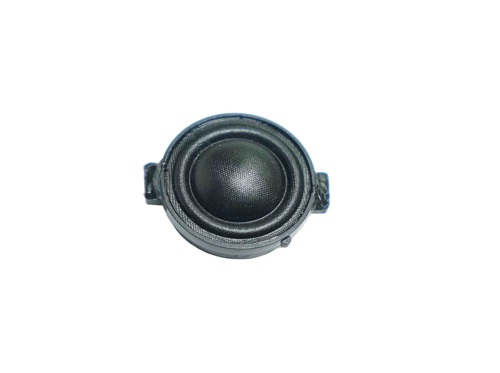
A cone tweeter is a high-frequency loudspeaker driver that uses a small cone-shaped diaphragm instead of the dome-shaped diaphragm found in dome tweeters.Although it resembles a miniature woofer,it is specifically engineered to handle high-frequency audio signals.
The primary role of a cone tweeter is to reproduce sounds such as:
Vocals and speech details
Cymbals and hi-hats
String instrument harmonics
Piano overtones
Ambient sound effects
Movie sound details
Without a tweeter,music would sound dull and lack clarity because the highest frequencies would not be reproduced effectively.
Before understanding the working principle,it is important to know the key components of a cone tweeter.
The cone diaphragm is the moving part that generates sound waves.
Common materials include:
Paper
Treated paper
Polypropylene
Composite materials
Synthetic fibers
The cone must be lightweight enough to move rapidly while remaining rigid enough to minimize distortion.
The voice coil is a coil of wire attached to the back of the cone.
Its function is to convert electrical signals into mechanical movement.
A permanent magnet creates a strong magnetic field around the voice coil.
The surround and spider allow controlled cone movement while keeping the voice coil properly aligned.
The basket supports all components and maintains structural stability.
A cone tweeter operates using the principle of electromagnetism.
The process can be divided into several steps:
The amplifier sends an electrical audio signal to the tweeter.
However,before reaching the tweeter,the signal usually passes through a crossover network.
The crossover filters out low frequencies and allows only high-frequency signals to reach the cone tweeter.
This protects the tweeter from damage and ensures accurate treble reproduction.
As the high-frequency audio signal enters the voice coil,it creates a varying electromagnetic field.
Because the audio signal constantly changes,the magnetic field generated by the voice coil also changes continuously.
The voice coil is positioned inside the magnetic gap of the permanent magnet.
The changing magnetic field generated by the voice coil interacts with the fixed magnetic field of the permanent magnet.
This interaction creates a force that pushes and pulls the voice coil.
Since the voice coil is attached directly to the cone diaphragm,any movement of the voice coil causes the cone to move as well.
The cone moves:
Forward when the electrical current flows in one direction
Backward when the current reverses direction
This movement occurs thousands of times per second.
For example:
A 5,000 Hz tone causes the cone to vibrate 5,000 times every second.
A 10,000 Hz tone causes the cone to vibrate 10,000 times every second.
As the cone moves back and forth,it compresses and rarefies the surrounding air.
These pressure variations travel through the air as sound waves.
The listener hears these sound waves as treble frequencies.
High-frequency sounds require extremely rapid movement.
A large diaphragm would have too much mass to move efficiently at very high speeds.
Therefore,cone tweeters use small and lightweight diaphragms to achieve:
Faster response
Better treble reproduction
Lower distortion
Improved transient performance
The low moving mass allows the cone to accurately follow rapid changes in the audio signal.
A cone tweeter cannot reproduce deep Bass frequencies.
To prevent damage and distortion,speaker systems use a crossover network.
The crossover:
Blocks low-frequency signals
Passes high-frequency signals
Improves sound quality
Protects the tweeter
Typical crossover frequencies include:
| Speaker Type | Crossover Frequency |
|---|---|
| Woofer to Tweeter | 2 kHz – 5 kHz |
| Midrange to Tweeter | 3 kHz – 8 kHz |
The exact crossover point depends on the speaker design.
Most cone tweeters operate within the following range:
| Specification | Typical Value |
|---|---|
| Frequency Response | 2 kHz – 20 kHz |
| Sensitivity | 85–95 dB |
| Impedance | 4Ω, 6Ω, 8Ω |
| Power Handling | 10–100 Watts |
Some high-quality cone tweeters may extend beyond 20 kHz.
The material of the cone greatly influences sound quality.
Advantages:
Lightweight
Natural sound
Good damping characteristics
Advantages:
Moisture resistant
Durable
Consistent performance
Advantages:
High stiffness
Low distortion
Improved frequency response
A stronger magnet provides better control over cone movement.
Benefits include:
Higher efficiency
Better transient response
Lower distortion
The size and construction of the voice coil affect:
Power handling
Sensitivity
Heat dissipation
Advanced voice coil designs improve overall performance.
Cone tweeters are less expensive to manufacture than many alternative tweeter designs.
They often produce strong output with relatively low amplifier power.
The cone design can withstand everyday use and environmental conditions.
Many listeners appreciate the warm and natural tonal balance of cone tweeters.
Limited Ultra-High Frequency Extension
Cone tweeters generally do not reproduce the highest frequencies as effectively as premium dome or ribbon tweeters.
High frequencies can become directional,reducing off-axis performance.
At extremely high frequencies,the cone may flex rather than move as a rigid surface,introducing distortion.
Cone tweeters are widely used in:
Bookshelf and floor-standing speakers often utilize cone tweeters for affordable high-frequency reproduction.
Many factory-installed and aftermarket car speakers include cone tweeters.
Compact speaker systems benefit from the efficiency and low cost of cone tweeters.
Commercial loudspeakers use cone tweeters to reproduce speech and high-frequency audio content.
Many classic loudspeaker systems rely on cone tweeters for their characteristic sound signature.
A cone tweeter produces sound by moving a lightweight cone diaphragm back and forth using electromagnetic forces generated between the voice coil and permanent magnet.
Most cone tweeters reproduce frequencies between approximately 2 kHz and 20 kHz.
A crossover prevents low-frequency signals from reaching the tweeter,protecting it from damage and improving sound quality.
Yes.Cone tweeters are commonly used in car audio systems because they are durable,efficient,and cost-effective.
A cone tweeter uses a cone-shaped diaphragm,while a dome tweeter uses a dome-shaped diaphragm.Dome tweeters generally provide wider dispersion and greater high-frequency detail,while cone tweeters are often more affordable and efficient.
Copyright © 2026 Jiangxi ROXOUND Acoustic Technology Co. All rights reserved.


Privacy Policy Cookie Policy Terms and Conditions