


News
CHECK IT NOW


2026-06-24 11:41:29
When listening to music,watching movies,or enjoying a live performance,much of the clarity and detail you hear comes from the Speaker's ability to reproduce high-frequency sounds.The component responsible for these frequencies is known as a Tweeter.Among the various Tweeter designs available,the Cone Tweeter remains one of the most widely used and cost-effective solutions in both consumer and professional audio systems.
A Cone Tweeter is a high-frequency loudspeaker driver that uses a small cone-shaped diaphragm to reproduce Treble frequencies,typically ranging from 2 kHz to 20 kHz.Although dome tweeters have become increasingly popular in modern Hi-Fi systems,cone tweeters continue to be used in home speakers,automotive audio systems,portable sound equipment,and commercial loudspeakers due to their efficiency,durability,and affordability.
In this article,we will explore what a cone tweeter is,how it works,its advantages and disadvantages,common types,applications,and how it compares with other tweeter technologies.
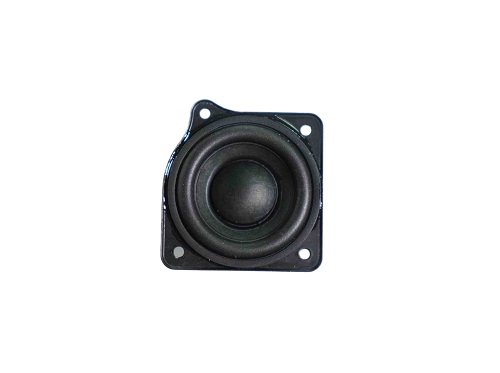
A cone tweeter is a type of dynamic loudspeaker driver specifically designed to reproduce high-frequency audio signals.Unlike a dome tweeter,which uses a dome-shaped diaphragm,a cone tweeter uses a miniature cone similar in design to a woofer but much smaller and lighter.
The primary purpose of a cone tweeter is to reproduce sounds such as:
Vocals and speech details
Cymbals and hi-hats
String instrument harmonics
Acoustic guitar overtones
High-frequency effects in movies
Ambient sounds and spatial details
Because human hearing can detect frequencies up to approximately 20,000 Hz,a high-quality cone tweeter plays a crucial role in delivering clear and natural sound reproduction.
A typical cone tweeter consists of several essential parts:
The cone is the moving surface that produces sound waves.It is typically made from:
Paper
Treated paper
Polypropylene
Composite materials
Synthetic fibers
The diaphragm must be lightweight enough to respond quickly to high-frequency signals while maintaining sufficient rigidity to minimize distortion.
Attached to the cone,the voice coil converts electrical energy into mechanical motion.
A permanent magnet creates a magnetic field that interacts with the voice coil.
The surround and spider keep the cone centered while allowing controlled movement.
The frame supports all components and maintains structural integrity.
The working principle of a cone tweeter is based on electromagnetic induction,similar to most dynamic loudspeakers.
An amplifier sends an electrical audio signal to the voice coil.
The electrical current flowing through the voice coil creates a changing magnetic field.
The interaction between the magnetic field of the voice coil and the permanent magnet causes the cone to move back and forth rapidly.
The vibrating cone pushes and pulls air molecules,creating sound waves that correspond to the original audio signal.
Because the cone is small and lightweight,it can vibrate thousands of times per second,accurately reproducing treble frequencies.
Most cone tweeters operate within the following range:
| Parameter | Typical Value |
|---|---|
| Frequency Response | 2 kHz – 20 kHz |
| Sensitivity | 85–95 dB |
| Power Handling | 10–100 Watts |
| Impedance | 4Ω, 6Ω, or 8Ω |
The exact specifications vary depending on the design and intended application.
One of the biggest advantages of cone tweeters is their relatively low production cost.This makes them ideal for budget-friendly speaker systems.
Cone tweeters often provide excellent sensitivity,allowing them to generate strong sound output with less amplifier power.
Because cone tweeters can reproduce some upper-midrange frequencies,they often integrate smoothly with woofers and midrange drivers.
Cone materials such as treated paper and polypropylene offer good resistance to everyday wear and handling.
Many audio enthusiasts appreciate the smooth and natural tonal character of well-designed cone tweeters,particularly in vintage speaker systems.
Compared with dome or ribbon tweeters,cone tweeters may struggle to reproduce the highest audible frequencies with the same level of detail.
High-frequency sounds from cone tweeters can be more directional,reducing off-axis listening performance.
At very high frequencies,the cone may no longer move as a perfectly rigid structure,introducing distortion.
Modern dome and ribbon tweeters generally offer greater accuracy and detail retrieval.
Paper cone tweeters are lightweight and provide natural sound characteristics.
Advantages include:
Excellent damping
Warm sound signature
Low manufacturing cost
They are commonly found in vintage audio equipment.
A treated paper cone receives additional coatings or treatments to improve stiffness and moisture resistance.
Benefits include:
Improved frequency response
Better durability
Reduced distortion
Polypropylene is widely used in automotive and outdoor audio systems.
Advantages include:
Water resistance
Consistent performance
Long service life
Composite materials combine multiple substances to optimize stiffness and damping.
Benefits include:
Enhanced accuracy
Better transient response
Improved high-frequency performance
One of the most common speaker design comparisons is between cone tweeters and dome tweeters.
Pros:
Lower cost
Higher efficiency
Durable design
Cons:
Narrower dispersion
Less detailed highs
Pros:
Wider soundstage
Better imaging
Greater detail retrieval
Cons:
Higher cost
More delicate diaphragm
For budget and general-purpose applications,cone tweeters remain an excellent choice.For high-end Hi-Fi systems,dome tweeters are often preferred.
Horn tweeters use a horn-shaped waveguide to increase efficiency and direct sound.
More compact
Smoother response
Lower cost
Higher sensitivity
Greater projection distance
Better suited for large venues
Horn tweeters are commonly used in public address systems and professional sound reinforcement applications.
Cone tweeters are used in a wide range of audio products.
Many bookshelf and floor-standing speakers utilize cone tweeters to deliver balanced high-frequency performance.
Automotive manufacturers frequently use cone tweeters because of their durability and cost-effectiveness.
Compact speaker systems often employ cone tweeters for efficient sound reproduction.
Commercial loudspeakers and announcement systems benefit from the efficiency of cone tweeter designs.
Many classic speaker systems from the 1960s,1970s,and 1980s feature cone tweeters.
When selecting a cone tweeter,consider the following factors:
A wider frequency range generally provides better treble reproduction.
Higher sensitivity allows greater output with less amplifier power.
Ensure the tweeter can safely handle the intended amplifier power.
Match the tweeter impedance with the speaker crossover network.
Higher-quality cone materials often result in improved sound performance and durability.
Although dome and ribbon technologies continue to dominate premium audio markets,cone tweeters remain relevant due to their simplicity and efficiency.
Recent developments include:
Advanced composite cone materials
Improved magnet structures
Better damping technologies
Computer-optimized cone geometries
These innovations help modern cone tweeters achieve better frequency response and lower distortion than earlier designs.
A cone tweeter is used to reproduce high-frequency audio signals,including vocals,cymbals,instrument harmonics,and other treble sounds.
Most cone tweeters operate between approximately 2 kHz and 20 kHz.
Cone tweeters are generally more affordable and efficient,while dome tweeters often provide greater detail and wider sound dispersion.
They are durable,cost-effective,and capable of producing clear high-frequency sound in demanding environments.
Common materials include paper,treated paper,polypropylene,synthetic fibers,and advanced composite materials.
Copyright © 2026 Jiangxi Rongxian Acoustic Technology Co. All rights reserved.


Privacy Policy Cookie Policy Terms and Conditions