






When you listen to music and suddenly notice the deep Bass of a kick drum, the rumble of a movie soundtrack, or the warmth of a bass guitar, there is a good chance a woofer is doing much of the work.
But what is a sound woofer, and why is it such an important part of a Speaker system?
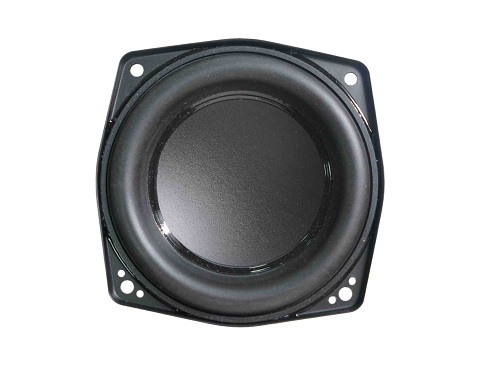
A woofer is a type of loudspeaker driver designed primarily to reproduce low-frequency and bass sounds. In a multi-driver audio system, it usually works together with midrange drivers and Tweeters so that each driver can focus on the frequencies it handles best. The exact frequency range varies according to the driver design and application.
What Is a Sound Woofer?
In simple terms, a woofer is the driver responsible for producing the lower part of the audible sound spectrum.
Unlike a Tweeter, which is designed for high-frequency details, a woofer uses a relatively large diaphragm or cone to move a greater volume of air. This movement helps reproduce bass notes with depth, energy, and physical impact.
A typical woofer speaker consists of several important components, including a cone or diaphragm, voice coil, magnet system, surround, spider, and basket. Together, these parts convert an electrical audio signal into controlled mechanical movement and, ultimately, sound waves.
The result is more than simply "more bass." A well-designed woofer helps music sound fuller and gives movies, games, and other audio content a stronger sense of scale and realism.
How Does a Woofer Work?
The working principle of a woofer is relatively straightforward.
First, an amplifier sends an electrical audio signal to the woofer's voice coil. The voice coil sits within the magnetic field created by the woofer's magnet. As the electrical signal changes, the interaction between the magnetic field and the voice coil causes the coil to move.
The voice coil is connected to the cone, so the cone moves back and forth with it. This movement pushes and pulls the surrounding air, creating sound waves.
Because low-frequency sound requires the movement of a substantial amount of air, woofer driver designs generally use larger diaphragms and suspension systems that allow controlled movement. The motor, cone, surround, and enclosure all need to work together to achieve useful bass output without excessive distortion.
This is why choosing a woofer is not simply a matter of selecting the largest driver available. Driver size, power handling, sensitivity, frequency response, enclosure design, and crossover configuration all influence the final result.
What Does a Woofer Do in a Speaker?
1. Produces Deep and Full Bass
The most obvious role of a woofer is to reproduce bass frequencies. It gives music weight and helps instruments such as bass guitar, kick drums, piano, and lower brass sound more natural.
In movies and games, the woofer can reproduce low-frequency effects such as explosions, thunder, engines, and other deep sounds.
2. Adds Depth to Music
Without sufficient low-frequency information, music can sound thin or lacking in body. A properly matched woofer adds warmth and fullness while allowing other drivers to concentrate on their own frequency ranges.
3. Supports a Balanced Speaker System
In a two-way or three-way speaker, the woofer does not work alone. It normally shares the audio spectrum with a tweeter and, in some designs, a midrange driver.
The crossover network divides the incoming signal and directs appropriate frequencies to each driver. This allows the woofer to focus on low and low-mid frequencies while the tweeter handles higher-frequency details.
4. Improves the Listening Experience
Good bass is not necessarily about making the system as loud as possible. Controlled low-frequency reproduction can make music feel more natural and movies more immersive.
For this reason, the woofer is an important part of both compact consumer speakers and larger professional audio systems.
Key Features of a Quality Woofer
Large and Rigid Diaphragm
A woofer's cone needs to move enough air while remaining sufficiently controlled. Cone materials can include treated paper, polypropylene, composite materials, and other engineered materials. The ideal choice depends on the intended application and design goals.
Strong Magnetic Motor
The magnet and voice coil form the motor structure that drives the diaphragm. A well-designed motor helps provide controlled movement and consistent performance.
Flexible Suspension
The surround and spider allow the cone to move while helping keep it properly centered. This is particularly important when the woofer is operating at higher excursion.
Suitable Power Handling
Power handling indicates how much electrical power the driver can tolerate under specified conditions. However, a higher power rating does not automatically mean better sound. The woofer should be matched with the amplifier, enclosure, and overall system design.
Appropriate Frequency Response
A woofer needs to cover the frequency range required by the application. In a two-way speaker, for example, the woofer may need to extend high enough to transition smoothly to the tweeter. In a three-way system, a dedicated midrange driver can take over part of that range.
Woofer vs. Subwoofer: What's the Difference?
Woofer and subwoofer are sometimes used interchangeably, but they are not exactly the same thing.
A woofer generally handles low-frequency and low-midrange content within a broader speaker system. A subwoofer is more specialized, focusing on the deepest bass and low-frequency effects.
For example, a bookshelf speaker may use a woofer to provide bass and lower midrange reproduction, while a home theater system may add a dedicated subwoofer to reproduce very deep low-frequency effects.
The exact frequency boundaries vary between designs, so it is better to evaluate the manufacturer's published frequency response rather than relying only on the product name.
Where Are Woofers Used?
Home Audio
Floor-standing speakers, bookshelf speakers, soundbars, and home theater systems can all use woofers to provide low-frequency reproduction.
A well-matched woofer can make music sound fuller while giving movie soundtracks more weight and impact.
Car Audio
Woofers are widely used in automotive audio systems. Because vehicle interiors have limited space, the driver size, enclosure, sensitivity, impedance, and power requirements need to be carefully considered.
Professional Audio
Professional speakers, stage monitors, studio monitors, and PA systems rely on low-frequency drivers to reproduce bass instruments and other low-frequency content accurately.
Home Theater
In home theater applications, woofers help reproduce the low-frequency information contained in movie soundtracks. They may work alongside dedicated subwoofers depending on the system configuration.
Commercial and Custom Audio Equipment
Woofer drivers can also be integrated into custom speaker cabinets, commercial audio products, multimedia systems, and other specialized sound equipment.
For manufacturers and system integrators, selecting a woofer based on the complete acoustic design is often more important than choosing a driver based on size alone.
How to Choose the Right Woofer?
If you're selecting a woofer for a new speaker project, start with the application.
Driver size: Choose a size that fits the required acoustic output and enclosure.
Frequency response: Check whether the driver covers the intended low-frequency range.
Power handling: Make sure the woofer is compatible with the amplifier and expected operating conditions.
Impedance: Confirm that the electrical characteristics are suitable for the amplifier.
Sensitivity: Higher sensitivity can allow a driver to produce a given sound pressure level with less input power.
Enclosure: Sealed, ported, and other enclosure designs can produce significantly different results.
Crossover: In multi-driver systems, the woofer must integrate smoothly with the midrange driver or tweeter.
Application: A home speaker, car audio system, stage monitor, and professional PA speaker may require very different woofer characteristics.
Ultimately, the best woofer is not necessarily the biggest or most powerful one. It is the driver that works well with the complete system.
FAQ About Sound Woofers
Is a woofer the same as a speaker?
Not exactly. A woofer is a type of speaker driver. A complete speaker system may contain one or more woofers along with tweeters, midrange drivers, crossover components, and an enclosure.
What frequency does a woofer produce?
There is no universal frequency range for every woofer. Depending on its design and application, a woofer may reproduce low frequencies as well as part of the lower midrange. The manufacturer's frequency-response specification is the best reference.
Is a bigger woofer always better?
No. A larger driver can move more air and may provide advantages for certain low-frequency applications, but performance also depends on the cone, motor, suspension, enclosure, amplifier, and overall system design.
Do I need both a woofer and a subwoofer?
Not always. Many bookshelf and floor-standing speakers use woofers without a separate subwoofer. A dedicated subwoofer becomes useful when deeper low-frequency extension or additional bass output is required.
Why is a woofer important for music?
A woofer provides much of the low-frequency foundation of music. It helps reproduce bass instruments, kick drums, lower notes, and other sounds that give music body and impact.
Final Thoughts
So, what is a sound woofer? Simply put, it is a low-frequency loudspeaker driver that helps turn electrical audio signals into the deep, full sounds we associate with bass.
From home audio and car audio to professional sound reinforcement and custom speaker systems, the woofer plays an important role in creating a balanced listening experience. Its performance depends not only on the driver itself, but also on factors such as cone material, motor structure, suspension, power handling, enclosure design, and crossover configuration.
If you are developing a speaker system or looking for a suitable woofer for a specific application, choosing the driver according to the complete acoustic design is the best way to achieve reliable performance and consistent sound quality.