





As home entertainment systems continue to evolve, audio brands and equipment manufacturers increasingly require Woofer Speakers that match specific acoustic, structural, and commercial requirements. Standard drivers may not always meet the design expectations of every home theater product. Custom Woofer speakers provide greater flexibility in dimensions, materials, electrical specifications, and overall product configuration.
For audio brands, distributors, and professional speaker manufacturers, partnering with an experienced OEM/ODM woofer supplier can simplify product development and support long-term production requirements.
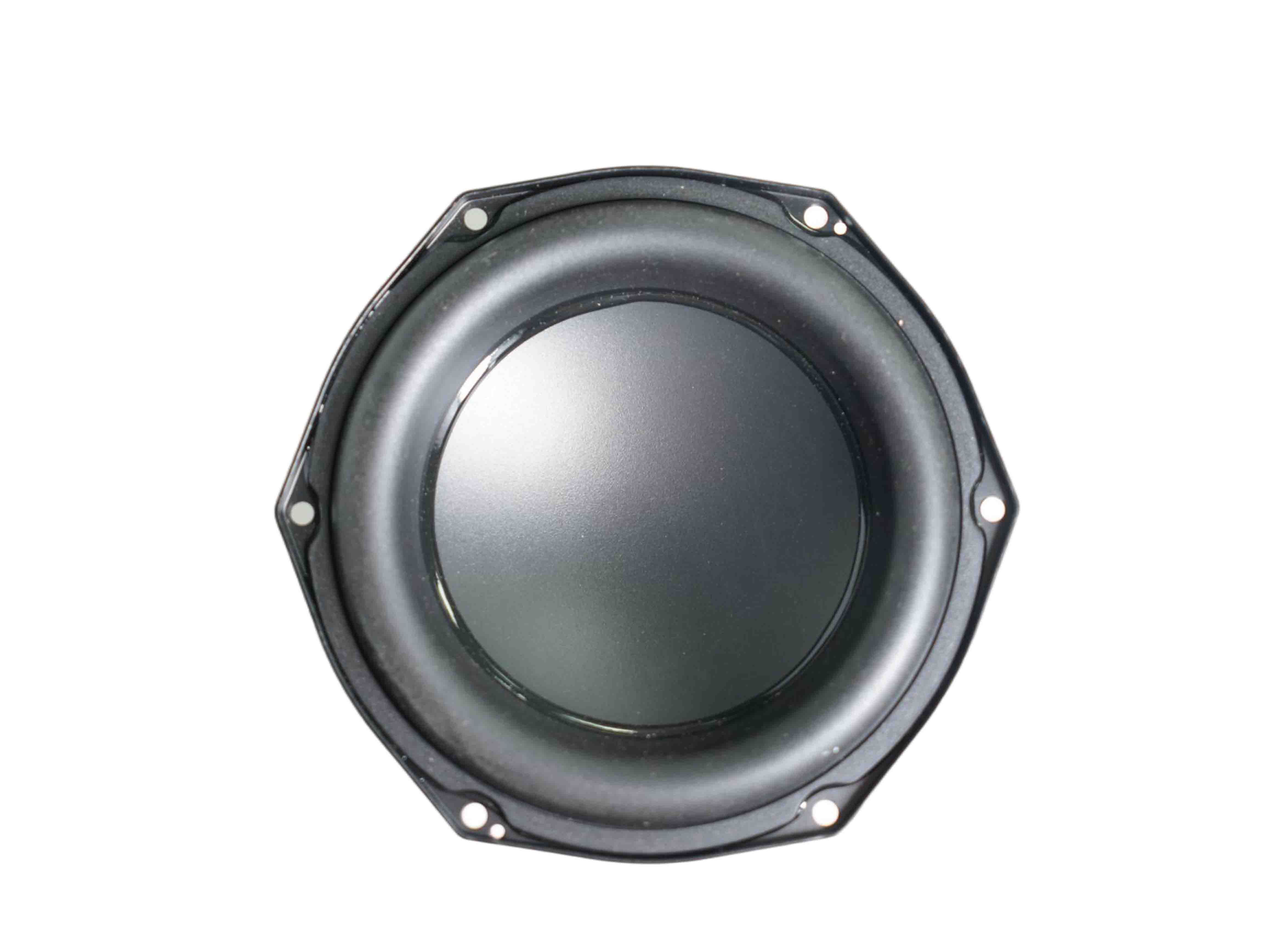
1. Why Choose Custom Woofer Speakers?
Custom woofer speakers allow manufacturers to develop products according to their target applications instead of relying entirely on standard specifications. This is particularly useful for brands developing unique home theater systems, compact speakers, premium audio products, or specialized speaker enclosures.
Key advantages include:
Application-specific design: Woofer dimensions and acoustic characteristics can be adjusted to match different speaker systems.
Flexible component selection: Cone materials, voice coils, magnets, surrounds, and other components can be selected according to project requirements.
Product differentiation: Customized drivers help brands develop products with distinctive specifications.
Enclosure compatibility: Driver dimensions and parameters can be coordinated with cabinet design.
Scalable production: OEM manufacturing supports repeat orders and consistent product specifications.
2. OEM vs. ODM Woofer Speaker Manufacturing
OEM and ODM are two common cooperation models in the speaker manufacturing industry. The appropriate option depends on the buyer's design resources, technical requirements, and product development strategy.
OEM Woofer Speaker Solutions
Under an OEM model, buyers generally provide product drawings, technical specifications, reference samples, or detailed design requirements. The manufacturer produces woofer speakers according to the agreed specifications.
This approach is suitable for established audio brands and home theater equipment manufacturers that already have their own product designs but need a manufacturing partner with stable production capabilities.
ODM Woofer Speaker Solutions
ODM cooperation provides additional product development support. Buyers can communicate their application requirements, target performance, preferred dimensions, and commercial expectations. The manufacturer then assists with product design, component selection, sample development, and production preparation.
This model is suitable for companies that want to expand their speaker product lines without managing every stage of driver development internally.
3. Key Customization Options for Home Theater Woofers
Woofer Size and Dimensions
Custom woofer sizes help manufacturers accommodate different cabinet structures and speaker configurations. Mounting dimensions, frame depth, overall diameter, and installation requirements should be confirmed before production.
Cone Materials
Different cone materials offer different mechanical and acoustic characteristics. Paper, polypropylene, aluminum, and composite materials are commonly considered in woofer development. The final selection should reflect the target frequency response, durability requirements, product positioning, and manufacturing budget.
Voice Coil and Magnet Assembly
The voice coil and magnet assembly influence the electrical and mechanical characteristics of a woofer. Buyers may specify voice coil diameter, winding materials, magnet type, and other structural details according to the required design.
Impedance and Power Handling
Custom woofer speakers can be developed with different impedance and power handling specifications to match amplifier configurations. Common impedance options include 4-ohm and 8-ohm designs, although the available configurations depend on the manufacturer's product capabilities.
Frame and Surround Design
The frame structure and surround material affect installation, mechanical stability, and driver movement. Customization may involve frame dimensions, mounting holes, surround geometry, and material selection.
4. The OEM/ODM Development Process
A structured development process helps reduce communication errors and ensures that the final product meets the agreed requirements.
Requirement confirmation: Buyers provide application details, target dimensions, technical specifications, and estimated order quantities.
Technical evaluation: The manufacturer reviews feasibility and recommends suitable components or design adjustments.
Sample development: Prototype woofers are produced for dimensional, electrical, and acoustic evaluation.
Testing and approval: Both parties review sample performance and confirm the final specifications.
Mass production: Approved designs enter production according to the agreed quality and delivery requirements.
Ongoing quality control: Production batches are inspected to maintain consistency with approved samples.
5. Quality Control in Custom Woofer Manufacturing
Consistent quality is essential for Home Theater Speaker brands and equipment manufacturers. Variations in component dimensions, voice coil assembly, magnet positioning, or suspension characteristics can affect the final product.
A comprehensive quality control process may include incoming material inspection, dimensional checks, electrical testing, impedance measurement, frequency response testing, and functional evaluation. Additional reliability tests can be arranged according to the application and buyer's requirements.
Clear technical documentation and approved reference samples also help maintain consistency across repeat orders.
6. What Buyers Should Prepare Before Requesting a Quote
To improve communication and obtain an accurate quotation, buyers should prepare as much project information as possible.
Required woofer diameter and mounting dimensions.
Rated impedance and power handling.
Target frequency response and sensitivity.
Preferred cone, surround, and frame materials.
Speaker enclosure type and application.
Estimated order quantity and annual purchasing volume.
OEM branding, packaging, and customization requirements.
Even if some technical parameters have not yet been finalized, providing the intended application and available reference samples can help the manufacturer evaluate the project.
7. Choosing the Right OEM/ODM Woofer Supplier
Price is only one factor when evaluating a custom woofer speaker supplier. Buyers should also examine engineering support, manufacturing experience, production equipment, quality management, sample development capabilities, and communication efficiency.
A reliable manufacturing partner should be able to explain technical options, identify potential design challenges, and provide a clear development and production plan. These capabilities are particularly important for brands planning long-term home theater product lines.
Custom woofer speakers offer home theater brands greater control over product specifications, acoustic design, and manufacturing requirements. Whether through OEM production based on existing designs or ODM cooperation with additional development support, the right manufacturing partner can help turn product concepts into scalable speaker solutions.
Contact us to discuss your custom woofer speaker project, technical requirements, OEM/ODM cooperation, and wholesale manufacturing needs.