





When designing or purchasing a home theater audio system, woofers and subwoofers are two important Speaker components to understand. Both are designed to reproduce low-frequency sound, but they serve different roles in audio reproduction and speaker system configurations.
For audio equipment manufacturers, home theater brands, and wholesale buyers, understanding the differences between woofer and subwoofer speakers helps with product selection, system integration, and speaker development.
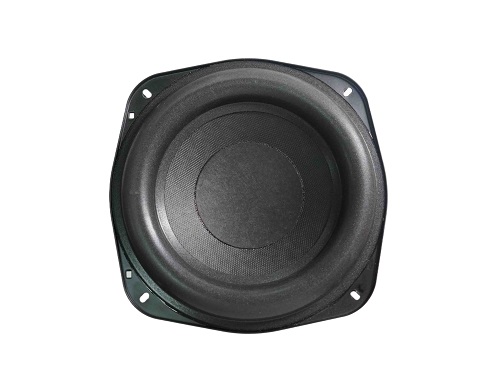
1. What Is a Woofer?
A woofer is a loudspeaker driver designed to reproduce low-frequency and, depending on its design, part of the midrange frequency spectrum. It is commonly integrated into bookshelf speakers, floorstanding speakers, and multi-way home theater speaker systems.
In a typical multi-way speaker, the woofer handles lower frequencies while the midrange driver and Tweeter reproduce higher frequency ranges. This division allows each driver to operate within a suitable frequency band.
Woofer speakers for home theater systems help reproduce Bass instruments, sound effects, and other low-frequency elements that contribute to a fuller listening experience.
2. What Is a Subwoofer?
A subwoofer is a specialized loudspeaker designed primarily for reproducing very low-frequency sound. It is commonly used to enhance deep bass effects in home theater systems, especially during movie playback.
Subwoofers are often housed in dedicated enclosures and operate through a separate low-frequency channel or bass management system. Many home theater configurations use a dedicated subwoofer to reproduce low-frequency effects (LFE) and bass content redirected from other channels.
Compared with conventional woofers, subwoofers are generally optimized for deeper bass reproduction and may require larger enclosures, specialized driver designs, and dedicated amplification.
3. Woofer vs. Subwoofer: Key Differences
| Comparison | Woofer | Subwoofer |
|---|---|---|
| Main Function | Reproduces low and lower-mid frequencies | Reproduces very low-frequency bass |
| Frequency Range | Varies by driver and system design | Typically optimized for deeper bass frequencies |
| Common Applications | Bookshelf and floorstanding speakers | Dedicated home theater bass systems |
| System Integration | Often combined with midrange drivers and Tweeters | Often connected through a dedicated subwoofer channel |
| Enclosure Design | Integrated into different speaker cabinets | Usually designed for dedicated low-frequency performance |
4. How Do Woofers and Subwoofers Work Together?
In a home theater system, woofers and subwoofers can work together to provide balanced sound reproduction across different frequency ranges.
The woofers in front, center, and surround speakers reproduce their assigned low-frequency content, while the subwoofer handles deeper bass and low-frequency effects. A crossover network or digital bass management system determines how the audio signal is distributed between the speakers.
Proper crossover settings help prevent unnecessary overlap or gaps between frequency ranges. The final configuration should consider the capabilities of each speaker, room acoustics, and the system's overall design.
5. Which One Is Better for Home Theater Systems?
Woofers and subwoofers are not direct replacements for each other. They serve different purposes, and the right choice depends on the intended speaker configuration.
When to Choose Woofer Speakers
Developing bookshelf or floorstanding speaker systems.
Building multi-way speaker configurations.
Integrating low-frequency drivers into compact speaker cabinets.
Designing full-range speaker products with separate midrange and high-frequency drivers.
When to Choose Subwoofers
Adding deeper bass to dedicated home theater systems.
Reproducing low-frequency effects in movie soundtracks.
Building separate bass speaker units.
Improving low-frequency output in larger entertainment spaces.
For many home theater applications, combining properly matched woofers and a dedicated subwoofer provides a more complete audio solution.
6. Important Specifications When Selecting Woofer and Subwoofer Drivers
For speaker manufacturers and B2B buyers, selecting suitable drivers requires evaluating more than their product names. Several technical parameters should be considered.
Frequency response: Indicates the frequency range a driver can reproduce under specified measurement conditions.
Power handling: Helps determine whether the driver is suitable for the intended amplifier and application.
Impedance: Determines electrical compatibility with the amplifier and speaker circuit.
Sensitivity: Indicates how efficiently a driver converts electrical input into acoustic output under specified test conditions.
Cone material: Influences stiffness, mass, damping, and overall driver characteristics.
Thiele-Small parameters: Help engineers evaluate driver behavior and optimize enclosure design.
These specifications should be assessed together because no single parameter can fully determine a driver's performance in a complete home theater system.
7. Custom Woofer and Subwoofer Solutions for Audio Manufacturers
For audio brands and speaker system manufacturers, standard drivers may not always meet specific cabinet dimensions, performance targets, or product positioning requirements. Custom woofer and subwoofer development offers greater flexibility in driver structure and technical specifications.
OEM and ODM manufacturing options may include customized driver dimensions, cone materials, voice coil configurations, magnet assemblies, impedance, power handling, and branding. During product development, manufacturers should also evaluate enclosure compatibility and acoustic performance to ensure that the selected driver works effectively within the complete system.
Working with an experienced speaker component supplier can help buyers coordinate technical requirements, sample development, quality inspection, and mass production.
The main difference between a woofer and a subwoofer lies in their intended frequency reproduction and application. Woofers handle low and lower-mid frequencies in various speaker systems, while subwoofers specialize in deeper bass reproduction. Both play important roles in home theater audio design.
For manufacturers, distributors, and audio brands, understanding these differences helps identify the right speaker components for different product configurations. Contact us to explore woofer speaker specifications, custom driver development, and OEM/ODM manufacturing solutions for your next audio project.