





When selecting Speaker drivers for an audio system, buyers often compare Woofers and subwoofers based on their physical dimensions. However, two drivers with the same nominal diameter can deliver very different sound performance. A woofer is generally designed to reproduce Bass and mid-bass frequencies, while a subwoofer focuses on deeper low-frequency output.
So, what makes a similar-sized woofer different from a subwoofer? The answer lies in their frequency response, cone excursion, motor structure, and overall acoustic design.
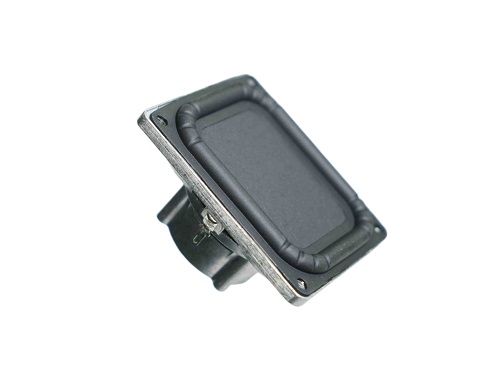
1. Different Frequency Response and Sound Performance
The most important difference between a woofer and a subwoofer is the frequency range they are designed to reproduce.
Woofer: Broader Bass and Mid-Bass Reproduction
A woofer typically handles low-frequency and mid-bass sounds. Depending on its design, it may operate across a relatively broad frequency range, allowing it to reproduce bass instruments, kick drums, and other low-frequency audio details.
In a multi-way speaker system, the woofer often works alongside midrange drivers and Tweeters to provide a balanced listening experience.
Subwoofer: Deep Low-Frequency Reproduction
A subwoofer is specifically engineered to reproduce very low frequencies, commonly covering approximately 20 Hz to 200 Hz depending on the model and system configuration.
Its main purpose is to deliver deep bass, powerful low-frequency effects, and physical impact in music, movies, and professional audio applications.
2. Construction Differences Between Similar-Sized Drivers
Although a woofer and a subwoofer may share the same nominal diameter, their internal structures can differ significantly.
Voice Coil and Magnetic Motor
The voice coil and magnetic assembly determine how electromagnetic force moves the cone. Subwoofers may feature larger or more robust motor structures and voice coils to support demanding low-frequency operation and higher thermal requirements.
Woofers are designed around their intended frequency range, balancing output, efficiency, and sound reproduction.
Cone and Suspension System
The cone material, surround, and spider affect the driver's moving mass, stiffness, and mechanical behavior. Subwoofers often use suspension systems designed to accommodate greater cone movement, while woofer suspension designs depend on the required balance between bass output and mid-bass performance.
Cone Excursion and Air Displacement
Excursion refers to the distance a speaker cone moves forward and backward during operation. Subwoofers generally require greater linear excursion to reproduce deep bass at high output levels.
For example, two 8-inch drivers may have the same nominal diameter, but a subwoofer with greater linear excursion (Xmax) can potentially displace more air and produce stronger deep bass, provided that its enclosure and power supply are properly matched.
3. Woofer vs. Subwoofer: Technical Comparison
| Parameter | Woofer | Subwoofer |
|---|---|---|
| Main Function | Bass and mid-bass reproduction | Deep bass reproduction |
| Frequency Range | Generally broader low-frequency range | Primarily very low frequencies |
| Cone Excursion | Depends on application and design | Often designed for greater linear excursion |
| Motor Design | Optimized for its operating range | Often optimized for demanding bass reproduction |
| Typical Applications | Bookshelf speakers, car speakers, stereo systems | Home theater, car bass systems, professional audio |
| Enclosure Requirements | Depends on system configuration | Often requires a dedicated low-frequency enclosure |
4. Why Doesn't Speaker Size Determine Bass Performance?
Speaker diameter is only one factor affecting acoustic performance. A driver's ability to reproduce deep bass depends on several engineering parameters.
Effective Cone Area (Sd): Determines the effective surface area available to move air.
Linear Excursion (Xmax): Indicates how far the cone can move while maintaining approximately linear operation.
Resonance Frequency (Fs): Helps indicate the driver's low-frequency characteristics.
Power Handling: Determines how much electrical power the driver can handle under specified conditions.
Thiele-Small Parameters: Help engineers evaluate driver behavior and select suitable enclosure designs.
For example, a well-designed 8-inch subwoofer may produce deeper bass than a similarly sized woofer because of its suspension, motor design, and greater displacement capability. However, the final performance also depends on the enclosure, amplifier, and system tuning.
5. How to Choose the Right Driver for Your Audio Project
The choice between a woofer and a subwoofer should be based on the intended audio application rather than physical dimensions alone.
Choose a Woofer for Balanced Audio Performance
A woofer is suitable for applications that require a combination of bass and mid-bass reproduction. Typical examples include bookshelf speakers, floor-standing speakers, car door speakers, and multimedia audio systems.
Choose a Subwoofer for Deeper Bass Output
A subwoofer is a better option when the system requires dedicated low-frequency reproduction, such as home theater systems, car audio bass systems, and professional sound equipment.
Evaluate Specifications Before Bulk Purchasing
For OEM and ODM speaker projects, procurement teams should compare impedance, sensitivity, rated power, frequency response, Xmax, Fs, Qts, and Vas. These specifications help determine whether a driver meets the acoustic, electrical, and mechanical requirements of the finished product.
6. Frequently Asked Questions
Can a woofer replace a subwoofer?
In some applications, yes. A woofer with suitable low-frequency response, excursion capability, and enclosure compatibility may reproduce bass frequencies normally handled by a subwoofer. However, it may not deliver the same deep-bass output at higher sound pressure levels.
Can a woofer and subwoofer have the same size?
Yes. Both drivers can have the same nominal diameter while differing in voice coil dimensions, magnetic motor design, suspension, cone characteristics, and acoustic performance.
Does a subwoofer always have more power than a woofer?
No. Power handling depends on voice coil design, thermal management, materials, and mechanical limitations. A subwoofer does not automatically have a higher power rating than a woofer.
What is more important when comparing similar-sized speaker drivers?
Frequency response, cone excursion, effective cone area, sensitivity, power handling, and enclosure compatibility are more meaningful comparison factors than diameter alone.
Conclusion
The difference between a woofer and a similar-sized subwoofer comes down to their intended acoustic performance and engineering design. Woofers generally cover a broader bass and mid-bass range, while subwoofers are designed to deliver deeper low-frequency output.
For speaker manufacturers and audio equipment buyers, selecting the right driver requires evaluating technical specifications, application requirements, and enclosure compatibility. A properly matched speaker driver helps achieve the desired sound performance while maintaining reliability in the final audio product.