






When shopping for car audio Speakers, you may come across terms such as 2-way coaxial speakers, 3-way coaxial speakers, and 4-way coaxial speakers. Although these speakers may look similar from the outside, their internal driver configuration and frequency distribution are different.
The number of “ways” generally describes how the audio frequency range is divided between different drivers. A typical 2-way coaxial speaker combines a woofer and Tweeter, while a 3-way design adds another driver for greater frequency separation. A 4-way coaxial speaker goes one step further by adding another high-frequency driver or specialized driver.
But does having more drivers automatically mean better sound? Not necessarily. Speaker quality depends on much more than the number of ways, including driver materials, crossover design, sensitivity, power handling, enclosure design, and overall tuning.
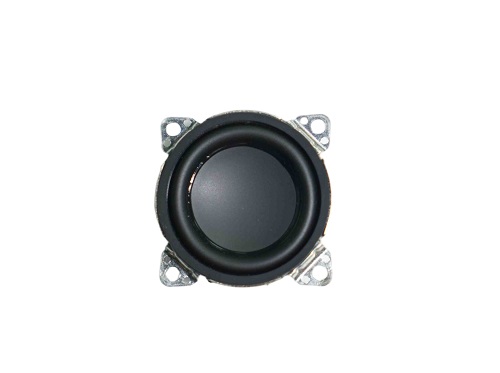
What Does “Way” Mean in a Coaxial Speaker?
In speaker terminology, “way” refers to the number of frequency sections into which the audio signal is divided. A crossover network directs different frequency ranges to the drivers designed to reproduce them.
For example, a basic 2-way coaxial speaker normally uses a woofer for lower and midrange frequencies and a tweeter for high frequencies. A 3-way design introduces another driver to handle part of the frequency range, while a 4-way design divides the sound even further.
Coaxial speakers are different from component speaker systems because multiple drivers are mounted along the same central axis or within the same speaker assembly. This allows manufacturers to provide a wider frequency response in a relatively compact package.
2-Way Coaxial Speakers
A 2-way coaxial speaker is one of the most common speaker configurations used in automotive audio systems. Its basic design consists of two main drivers: a woofer and a tweeter.
How Does a 2-Way Coaxial Speaker Work?
The woofer is responsible for reproducing lower frequencies and much of the midrange, while the tweeter focuses on higher frequencies such as vocals, cymbals and other high-frequency details.
A crossover separates the incoming audio signal so that each driver receives the frequency range it is designed to handle. This reduces the workload on individual drivers and helps produce a more balanced sound.
Advantages of 2-Way Coaxial Speakers
Simple and compact driver configuration
Generally easier to install
Lower cost compared with more complex designs
Suitable for many factory speaker replacements
Usually easier to achieve smooth integration between drivers
For drivers who want a straightforward upgrade from factory speakers without adding a complicated audio system, a quality 2-way coaxial speaker can be an excellent choice.
3-Way Coaxial Speakers
A 3-way coaxial speaker adds another driver to the basic woofer-and-tweeter configuration. The additional driver is typically designed to reproduce midrange frequencies or provide additional high-frequency output, depending on the speaker design.
In a conventional 3-way arrangement, the woofer handles low frequencies, a dedicated midrange driver handles the vocal and instrument range, and the tweeter reproduces high frequencies.
Why Add a Midrange Driver?
The midrange is an important part of music because many vocals, guitars, keyboards and other instruments occupy this frequency area. In a 2-way system, the woofer has to cover both bass and a significant portion of the midrange.
With a 3-way configuration, the dedicated midrange driver can take over more of this work. This can help improve vocal clarity and separation when the drivers and crossover are properly designed.
Advantages of 3-Way Coaxial Speakers
More specialized frequency reproduction
Potentially clearer vocal and instrument detail
Better separation between bass, midrange and treble
Can provide a fuller and more detailed listening experience
Useful for listeners who want more detail than a basic 2-way system
However, adding another driver also makes the design more complicated. The crossover must be carefully engineered so that the drivers work together smoothly instead of creating unwanted peaks, gaps or phase problems.
4-Way Coaxial Speakers
A 4-way coaxial speaker divides the audio spectrum into even more sections or incorporates additional specialized drivers. Depending on the manufacturer, the exact driver arrangement can vary.
Some 4-way coaxial speakers use a woofer, midrange driver, tweeter and additional high-frequency driver. Others may use multiple smaller high-frequency drivers to increase the amount of treble detail and output.
What Are the Benefits of a 4-Way Coaxial Speaker?
The main idea behind a 4-way configuration is to give individual drivers more specialized responsibilities. Instead of asking a single woofer or tweeter to reproduce a very broad range, the system can distribute the frequencies across multiple drivers.
Greater frequency separation
Potentially more high-frequency detail
Higher perceived sound resolution
Can produce a more energetic and detailed sound
Suitable for listeners who prefer a strong high-frequency presentation
However, a 4-way speaker is not automatically better than a 2-way or 3-way speaker. Poor driver quality or an improperly designed crossover can make a multi-way speaker sound less natural than a well-engineered 2-way model.
2-Way vs 3-Way vs 4-Way Coaxial Speakers
| Feature | 2-Way | 3-Way | 4-Way |
|---|---|---|---|
| Basic Configuration | Woofer + Tweeter | Woofer + Midrange + Tweeter | Woofer + Additional Mid/High Drivers |
| Frequency Separation | Basic | More detailed | More specialized |
| Sound Character | Balanced and natural | Fuller and clearer | Detailed and energetic |
| Design Complexity | Low | Medium | Higher |
| Typical Cost | Lower | Medium | Higher |
Is a 4-Way Coaxial Speaker Better Than a 2-Way Speaker?
This is one of the most common questions when comparing coaxial speakers. The short answer is no, not necessarily.
The number of drivers is only one factor in speaker performance. A high-quality 2-way coaxial speaker can sound more balanced and natural than a poorly designed 3-way or 4-way model.
Driver materials, magnet structure, voice coil design, crossover quality, sensitivity, frequency response and power handling can all have a significant effect on the final sound.
For example, if a manufacturer adds inexpensive additional drivers simply to increase the “way” count without optimizing the crossover, the extra drivers may provide little real-world improvement. On the other hand, a well-designed 3-way or 4-way system can provide better separation and detail when the drivers are properly matched.
What Is the Difference in Sound?
2-Way Sound
2-way coaxial speakers generally aim for a simple and coherent sound. Because there are fewer drivers, it can be easier to integrate the woofer and tweeter. This makes them suitable for everyday listening, factory speaker replacement and general car audio upgrades.
3-Way Sound
3-way coaxial speakers can provide greater definition in the midrange. Vocals and instruments may sound more distinct because the dedicated midrange driver reduces the amount of work required from the woofer.
4-Way Sound
4-way coaxial speakers are often designed for listeners who want a more pronounced and detailed high-frequency presentation. The additional driver configuration can increase treble output and perceived detail when the system is properly engineered.
However, sound preference is subjective. Some listeners prefer the smoother and more natural character of a well-designed 2-way speaker, while others prefer the brighter and more energetic presentation of a multi-way speaker.
Which Coaxial Speaker Should You Choose?
The right choice depends on your vehicle, audio system, listening habits and budget.
Choose a 2-Way Coaxial Speaker If:
You want an affordable speaker upgrade.
You prefer a simple and balanced sound.
You are replacing factory speakers.
You want easy installation.
You do not need an extremely detailed high-frequency presentation.
Choose a 3-Way Coaxial Speaker If:
You want improved midrange clarity.
You listen to vocals and instrument-heavy music.
You want more frequency separation.
You are looking for a step up from basic factory speakers.
Choose a 4-Way Coaxial Speaker If:
You prefer strong and detailed treble.
You want a more energetic sound.
You enjoy detailed music reproduction.
You have a compatible audio system that can take advantage of the additional driver configuration.
What Should You Look for Besides the Number of Ways?
When comparing 2-way, 3-way and 4-way coaxial speakers, do not focus only on the number printed on the product specification sheet. Several other parameters are equally important.
1. Frequency Response
Check the speaker's stated frequency response to understand the range of frequencies it is designed to reproduce. A wider frequency range can be useful, but the actual quality of reproduction within that range is also important.
2. Sensitivity
Sensitivity indicates how efficiently the speaker converts amplifier power into sound output. Speakers with higher sensitivity can be easier to drive, especially when using a factory head unit with limited power.
3. Power Handling
Power handling helps determine how much amplifier power a speaker can handle. Make sure the speaker's power requirements are compatible with your amplifier or head unit.
4. Driver Materials
Woofer cones, tweeter diaphragms and surrounds can be manufactured from different materials. These materials influence durability, responsiveness and sound characteristics.
5. Crossover Design
The crossover is particularly important in a multi-way speaker. It determines how frequencies are distributed between the drivers. A well-designed crossover can help create a smooth transition between frequency ranges.
6. Installation Compatibility
Before purchasing a car coaxial speaker, check the speaker diameter, mounting depth, impedance and mounting pattern. The speaker must physically fit the vehicle and electrically match the audio system.
2-Way, 3-Way or 4-Way: Which One Is Best?
There is no universal answer. A 2-way coaxial speaker is often the best choice for a simple, reliable and balanced upgrade. A 3-way coaxial speaker can be attractive when improved midrange detail and frequency separation are priorities. A 4-way coaxial speaker may suit listeners who want stronger high-frequency output and a more detailed presentation.
Most importantly, do not assume that more drivers automatically mean better sound. A well-engineered speaker with high-quality drivers and a properly designed crossover can outperform a speaker with more drivers but lower-quality components.
Conclusion
The main difference between 2-way, 3-way and 4-way coaxial speakers is how the audio spectrum is divided among the drivers. A 2-way speaker typically combines a woofer and tweeter, a 3-way model adds another specialized driver, and a 4-way model divides the frequency range even further.
For everyday vehicle upgrades, 2-way coaxial speakers offer a practical combination of simplicity, sound quality and affordability. For listeners looking for more detailed midrange or high-frequency reproduction, 3-way and 4-way designs may provide additional performance.
Ultimately, the best coaxial speaker is not necessarily the one with the highest number of ways. Driver quality, crossover design, materials, sensitivity, power handling and system compatibility should all be considered before making a decision.
Frequently Asked Questions
Are 3-way coaxial speakers better than 2-way speakers?
Not always. A 3-way speaker has more specialized drivers and can provide better frequency separation, but a high-quality 2-way speaker can deliver better overall sound than a poorly designed 3-way model.
Are 4-way coaxial speakers worth it?
They can be worth considering if you want a more detailed and energetic sound and the speaker is properly engineered. However, the additional drivers should not be the only reason for choosing a 4-way speaker.
What is a coaxial speaker?
A coaxial speaker combines multiple drivers within the same speaker assembly, typically sharing the same central axis. This allows different drivers to reproduce different frequency ranges while keeping the speaker relatively compact.
Do more speaker drivers mean better sound?
No. More drivers can allow the frequency range to be divided into more specialized sections, but overall sound quality depends on driver quality, crossover design, tuning and system integration.
Which is better for a car, 2-way or 3-way coaxial speakers?
For a simple factory speaker replacement, a good 2-way coaxial speaker is often sufficient. If you want greater midrange detail and a more specialized frequency response, a well-designed 3-way coaxial speaker may be a better option.