






Choosing the right coaxial car Speakers can make a significant difference in your listening experience. With so many options available, it is easy to focus only on speaker size, power rating or the number of ways. However, these specifications do not tell the whole story.
Whether you are replacing factory speakers, upgrading your car audio system, or looking for better sound quality, the right speaker should match your vehicle, audio equipment, listening preferences and budget.
Coaxial speakers are popular because they combine multiple drivers into a compact speaker assembly. Depending on the design, you can find 2-way, 3-way and 4-way coaxial speakers with different driver configurations and sound characteristics.
So, how do you choose the right coaxial speakers? The following factors can help you make a more informed decision.
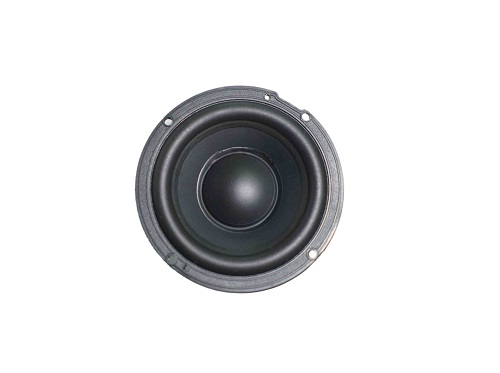
1. Check the Speaker Size First
The first thing to check is whether the speaker physically fits your vehicle. Common car speaker sizes include 4-inch, 5.25-inch, 6.5-inch, 6x8-inch and 6x9-inch models, although the exact requirements vary between vehicles.
Before purchasing a new speaker, check the original speaker's diameter, mounting depth and mounting pattern. A speaker with the correct diameter may still be unsuitable if its depth is too large or its mounting holes do not match.
If you are replacing factory speakers, vehicle compatibility should always be checked before considering sound characteristics or power ratings.
2. Decide Between 2-Way, 3-Way and 4-Way Speakers
The number of ways is another factor to consider when selecting coaxial speakers.
A 2-way coaxial speaker typically combines a woofer and Tweeter. It provides a relatively simple design and can offer a good balance between Bass, vocals and Treble.
A 3-way coaxial speaker usually adds a dedicated midrange driver. This can provide greater separation between low, mid and high frequencies and may improve vocal and instrument clarity.
A 4-way coaxial speaker uses an additional driver configuration to further divide the frequency range or enhance high-frequency reproduction.
However, more ways do not automatically mean better sound. Driver quality, crossover design and overall tuning are often more important than simply counting the number of drivers.
3. Consider Your Music Preferences
Your preferred type of music should also influence your choice of car coaxial speakers.
If you mainly listen to pop, podcasts or general music, a well-balanced 2-way speaker may provide everything you need.
If you frequently listen to vocals, acoustic music, rock or live recordings, a 3-way speaker may be attractive because of its additional midrange reproduction.
If you prefer bright, energetic music with prominent cymbals and high-frequency details, a well-designed 4-way speaker may be worth considering.
The key is to choose a speaker based on the sound you actually enjoy rather than selecting the model with the largest number of drivers.
4. Check Power Handling
Power handling is an important specification when choosing a coaxial speaker. It indicates how much power the speaker can handle under specified conditions.
You may see specifications such as RMS power and peak power. RMS power is generally more useful when matching speakers with an amplifier because it provides a more practical indication of continuous power handling.
If your car uses the factory head unit without a separate amplifier, extremely high-power speakers may not provide their full potential. In this situation, speaker sensitivity can be particularly important.
If you are using an aftermarket amplifier, make sure the speaker's power handling is compatible with the amplifier's output.
5. Pay Attention to Speaker Sensitivity
Speaker sensitivity describes how efficiently a speaker converts electrical power into acoustic output.
A higher-sensitivity speaker can produce more sound from the same amount of amplifier power. This can be useful when replacing factory speakers while continuing to use the original head unit.
For example, if your vehicle's factory audio system has limited power, a high-sensitivity coaxial speaker may be a practical choice because it can achieve useful output without requiring a powerful external amplifier.
Therefore, do not evaluate speakers based on wattage alone. Sensitivity and power requirements should be considered together.
6. Check Speaker Impedance
Speaker impedance is another specification that should match your audio equipment. Common car speaker impedance ratings include 2 ohms and 4 ohms.
The impedance affects the electrical load presented to the amplifier or head unit. Using a speaker with an impedance that is not supported by the amplifier can result in poor performance or potentially damage the equipment.
Always check the recommended impedance range of your head unit or amplifier before installing new speakers.
7. Consider the Woofer Cone Material
The woofer cone plays an important role in the speaker's overall sound characteristics and durability.
Different manufacturers use materials such as polypropylene, paper, treated paper, composite materials and other synthetic materials.
Polypropylene is widely used in automotive speakers because it can provide a useful combination of durability, moisture resistance and consistent performance.
Other materials may offer different combinations of stiffness, weight and responsiveness. There is no single cone material that is ideal for every application, so the complete driver design should be considered.
8. Look at the Tweeter Design
The tweeter is responsible for reproducing higher frequencies. Its material, size and design can affect the character of the treble.
Common tweeter materials include PEI, silk, textile materials, aluminum and other synthetic or metal materials.
Soft-dome tweeters are often designed to provide a smoother high-frequency presentation, while some metal tweeters can deliver a brighter and more pronounced treble.
When choosing a coaxial car speaker, consider whether you prefer a smooth, natural sound or a brighter and more energetic presentation.
9. Check the Frequency Response
Frequency response indicates the range of frequencies a speaker is designed to reproduce.
A typical specification may show a range from a low frequency to a high frequency. However, a wider number on the specification sheet does not automatically mean better sound.
What matters is how consistently the speaker reproduces frequencies across its operating range and how well the different drivers work together.
Frequency response should therefore be evaluated together with driver design, crossover performance and actual listening requirements.
10. Consider the Crossover Design
The crossover is especially important in multi-way coaxial speakers. It determines which frequencies are sent to each driver.
A properly designed crossover allows the woofer, midrange driver and tweeter to operate within their intended frequency ranges. This can help create a smoother transition between drivers.
When comparing a 2-way, 3-way or 4-way speaker, do not simply count the drivers. Consider how those drivers are integrated and whether the crossover design is optimized for the complete speaker system.
11. Think About Installation Requirements
Even an excellent speaker will not perform properly if it is installed incorrectly.
Before purchasing, check the mounting depth, cutout diameter, mounting holes and connector compatibility. Some vehicles may also require mounting brackets, adapter rings or wiring harnesses.
In some installations, the position of the tweeter can also influence the perceived soundstage. Proper installation can help the speaker perform closer to its intended design.
12. Do You Need an Amplifier?
Not every coaxial speaker requires an external amplifier. Many aftermarket coaxial speakers are designed to work with factory head units.
However, if you want higher volume, stronger dynamics or better control at higher listening levels, adding an amplifier may provide a noticeable improvement.
If you plan to use an amplifier, choose speakers based on their RMS power handling, impedance and sensitivity so that the components work together properly.
2-Way vs 3-Way vs 4-Way: Which Should You Choose?
| Your Priority | Recommended Choice | Why |
|---|---|---|
| Simple factory upgrade | 2-Way | Simple, practical and easy to match |
| Balanced everyday listening | 2-Way | Good balance between bass, mids and treble |
| Clear vocals and instruments | 3-Way | Additional midrange driver can improve separation |
| More detailed high frequencies | 3-Way or 4-Way | More specialized high-frequency reproduction |
| High-output aftermarket system | 3-Way or 4-Way | Can provide greater frequency separation when properly designed |
What Is the Most Important Factor When Choosing Coaxial Speakers?
There is no single specification that determines whether a coaxial speaker is right for you.
A better approach is to evaluate the complete system. Start with vehicle compatibility, then consider speaker size, impedance, sensitivity and power handling. After that, compare driver configuration, materials, frequency response and crossover design.
Finally, consider your listening preferences and budget.
This approach is more reliable than simply choosing the speaker with the highest wattage or the largest number of drivers.
Common Mistakes When Buying Coaxial Speakers
Choosing Only by Wattage
A higher wattage rating does not automatically mean higher sound quality. Power handling should be matched to the amplifier and considered together with sensitivity.
Assuming More Ways Are Always Better
A 4-way coaxial speaker is not automatically better than a well-designed 2-way model. Driver quality and crossover integration are critical.
Ignoring Vehicle Compatibility
A speaker that does not physically fit the vehicle can require additional modification. Always check the mounting dimensions before purchasing.
Ignoring the Factory Audio System
Consider whether you are using a factory head unit, aftermarket receiver or external amplifier. The speaker should be selected to work with the available power.
How to Choose Coaxial Speakers Step by Step
If you are unsure where to start, follow this simple process:
Check your vehicle: Confirm the required speaker size and mounting depth.
Check your audio system: Identify the head unit and amplifier power.
Choose the impedance: Make sure it is compatible with your audio equipment.
Check sensitivity: Pay particular attention if you are using the factory head unit.
Choose the driver configuration: Decide between 2-way, 3-way and 4-way based on your sound preferences.
Compare driver materials: Look at the woofer cone, surround and tweeter materials.
Review the crossover: A good crossover is important for smooth frequency integration.
Consider installation: Check mounting hardware and wiring requirements.
Set your budget: Choose the best overall design rather than simply buying the most expensive model.
Final Thoughts
Choosing the right coaxial speakers is about finding the right balance between compatibility, sound quality, power requirements and budget.
A 2-way coaxial speaker can be an excellent choice for a straightforward factory speaker replacement. A 3-way model may be more suitable for listeners who want improved midrange clarity, while a properly engineered 4-way speaker can provide additional frequency separation and high-frequency detail.
Regardless of the configuration, the most important thing is to look beyond the number of drivers. Speaker materials, crossover design, sensitivity, impedance, power handling and installation all contribute to the final listening experience.
By considering these factors together, you can choose the right coaxial car speakers for your vehicle instead of simply choosing the speaker with the biggest specifications.
Frequently Asked Questions
How do I know what size coaxial speakers my car needs?
Check the original factory speaker size, mounting depth and mounting pattern, or consult the vehicle's speaker compatibility information. The required size varies between vehicle models.
Are 3-way speakers better than 2-way coaxial speakers?
Not necessarily. A 3-way speaker has an additional driver and can provide greater frequency separation, but overall sound quality depends on the driver quality, crossover and tuning.
Should I choose 2-ohm or 4-ohm coaxial speakers?
The correct impedance depends on your head unit or amplifier. Always choose a speaker with an impedance supported by the audio equipment.
Do I need an amplifier for coaxial speakers?
No. Many coaxial speakers can work with a factory head unit. However, an external amplifier may be useful when higher output or greater power is required.
What is more important, sensitivity or power handling?
Both are important, but their importance depends on your audio system. Sensitivity is particularly useful when working with a low-power factory head unit, while power handling becomes more important when using a more powerful amplifier.
Are coaxial speakers good for car audio upgrades?
Yes. Coaxial speakers are a practical option for many vehicle upgrades because multiple drivers are integrated into one compact assembly, making installation relatively straightforward.